
“He came so close to surviving”
Four of the Scully brothers went to war – sadly one didn’t come home
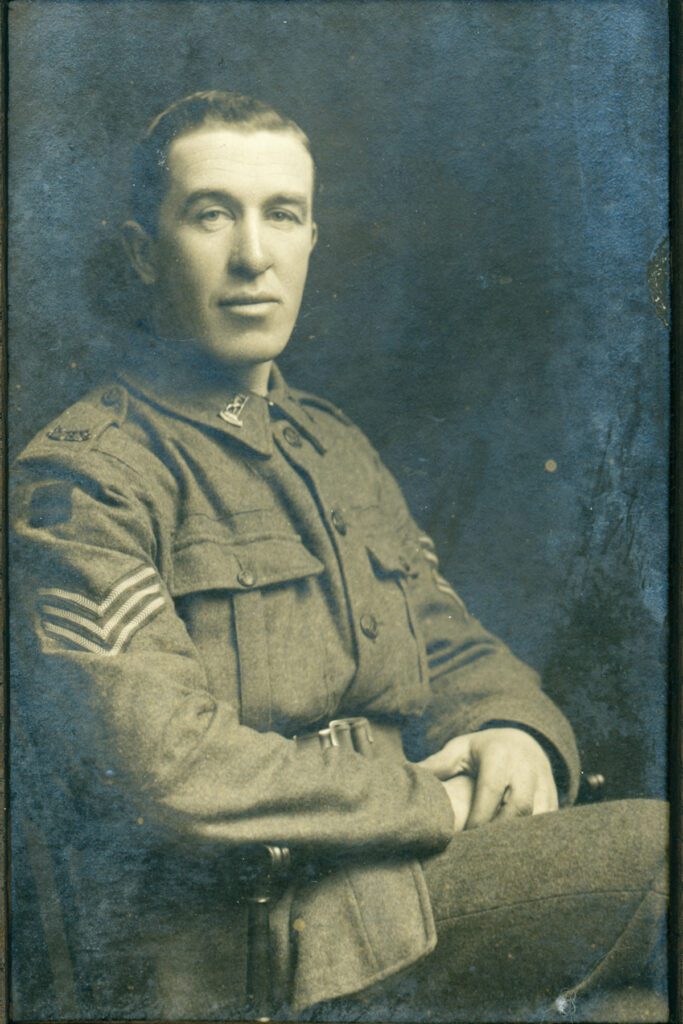
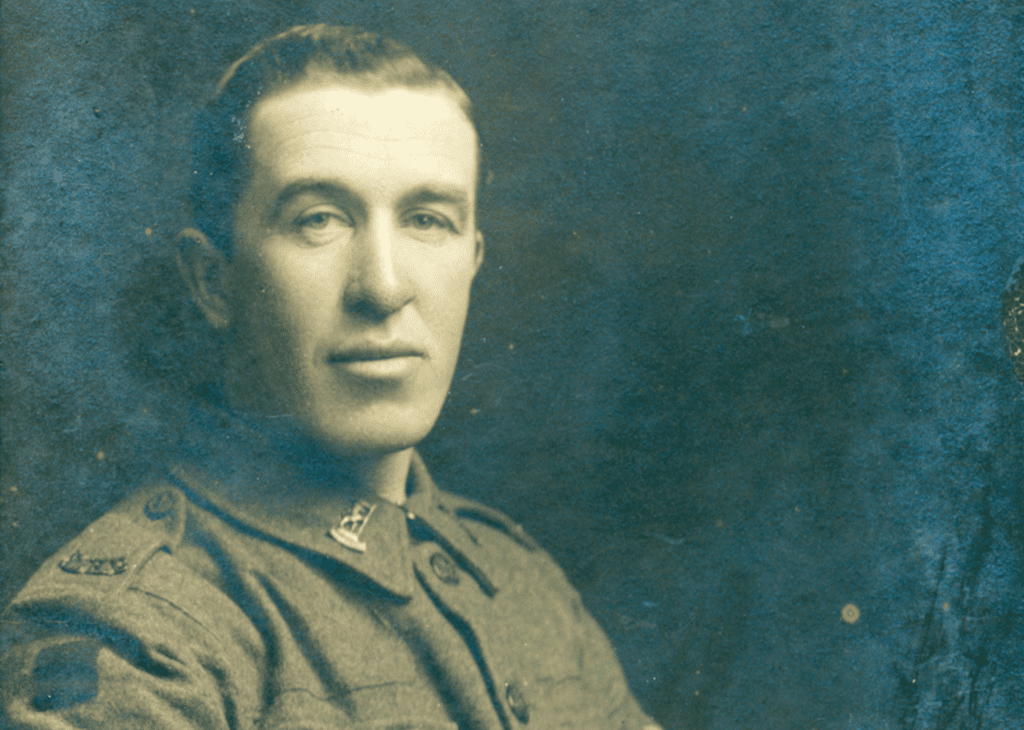
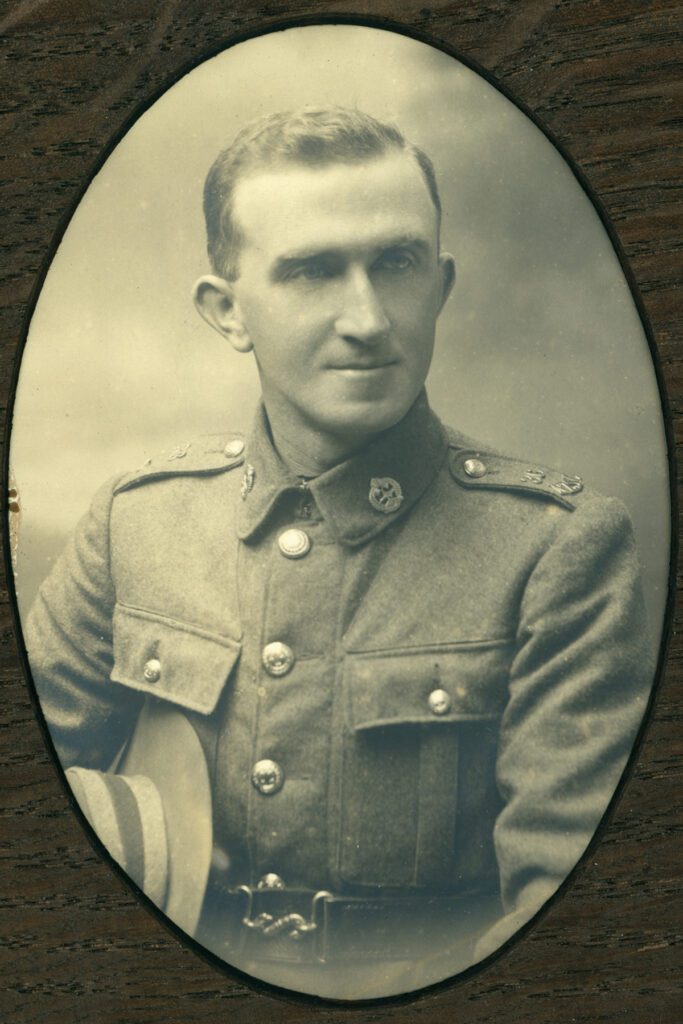
Sergeant Major Peter Alphonsus Scully: It’s a name that commands attention.
At around six foot tall, which was unusual for the early 1900s, Peter was a great sportsman. He captained Invercargill’s Athletic Rugby Club for several seasons and played for Southland alongside 1910 All Black Jimmy Ridland.
He started World War One as a private and quickly moved up the ranks to a Company Sergeant Major in the 2nd Battalion of the NZ Rifle Brigade.
In September 1918, during operations near Gouzeaucourt Wood in northern France, he received the Distinguished Conduct Medal for “conspicuous gallantry and initiative”
The citation read: “On one occasion he observed a machine-gun fired on the flank of the battalion. He at once rushed it, and bombing the crew, killed them all and captured the gun.”
Sadly, two months later Peter was killed in action on 4 November 1918 during the liberation of Le Quesnoy. Tragically, his mate Jimmy was killed in action nearby the day after.
Peter’s three brothers – James, Michael and John – were also fighting on the Western Front during World War One with James losing his right eye after being hit by shrapnel.
“The sad thing is,” says Peter’s great niece, Kathryn King, whose grandfather was Michael, “a week later the war ended but the family had not received news of Peter.
“They would have thought their four sons were coming home. But then a few days later, they found out that Peter had died.”
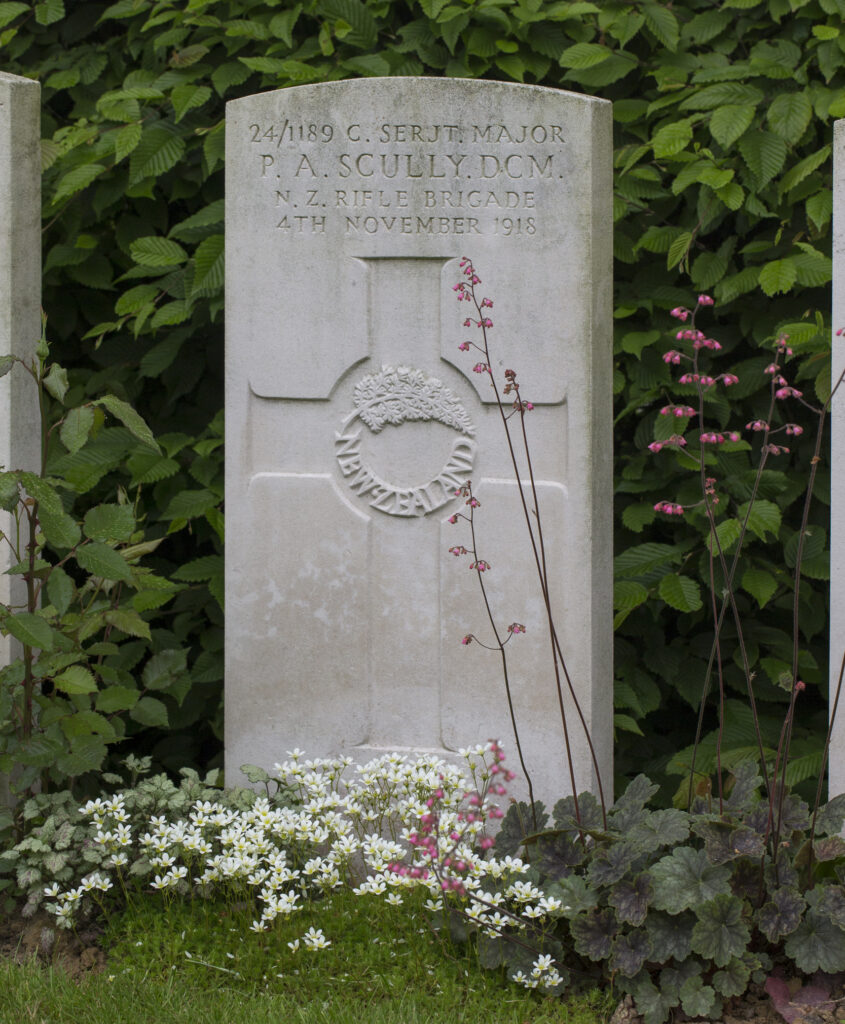
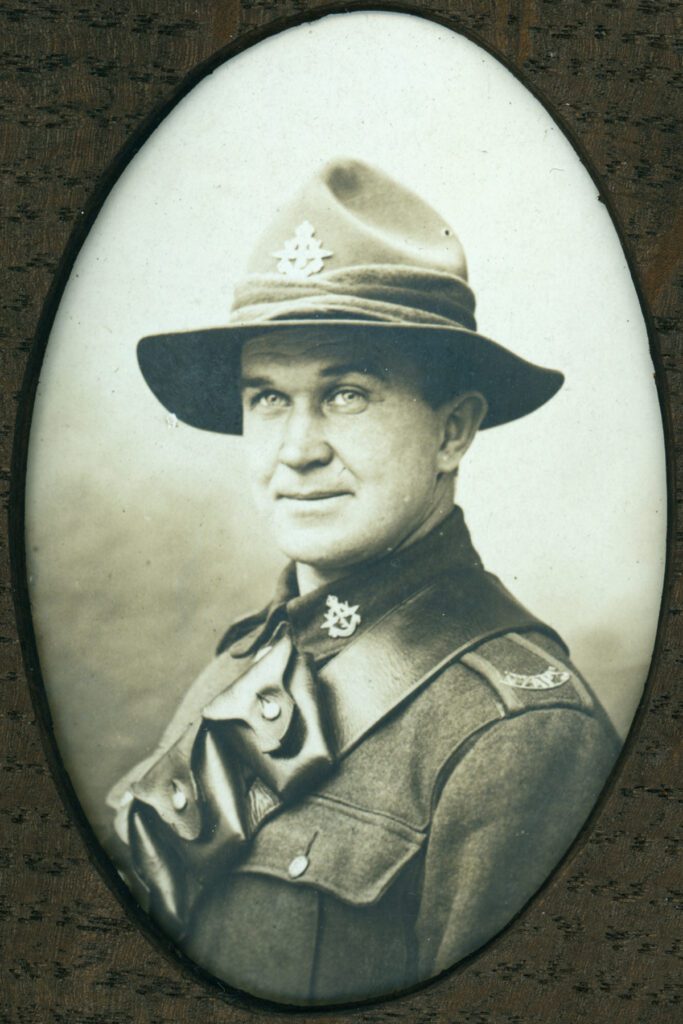
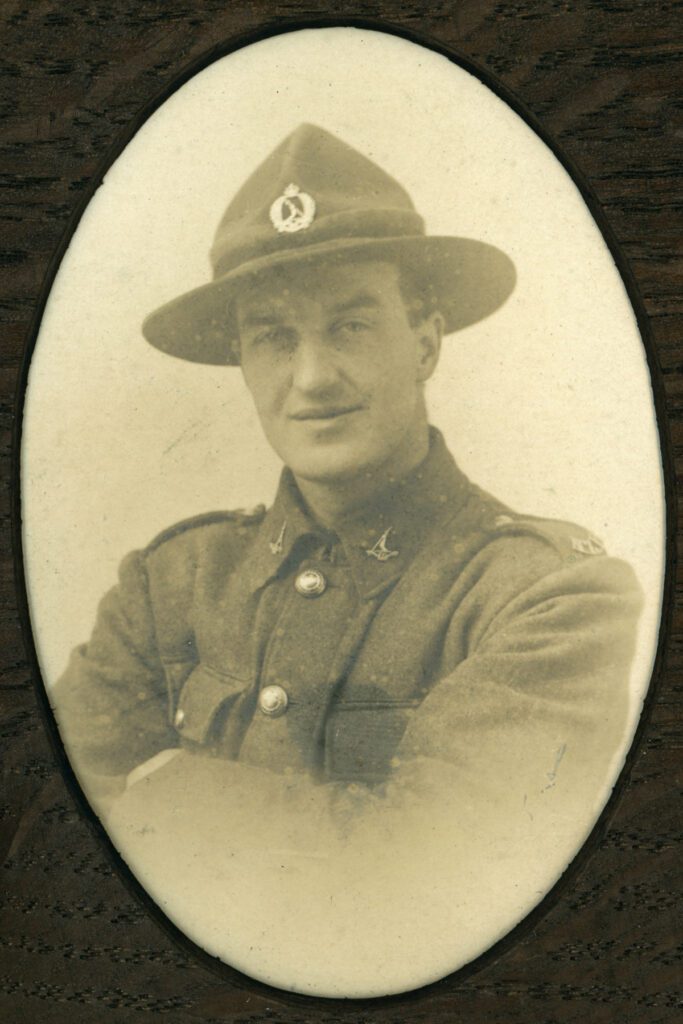
Peter is buried in the Le Quesnoy Communal Cemetery Extension alongside 49 other Kiwi soldiers.
A family shaped by war
“It was cruel timing,” says Kathryn of Peter’s death. “To think that he had endured years of conflict and in seven days it would’ve been all over.”
“He lasted so long and I think what really got me is that he nearly made it – he came so close to surviving,” she reflects.
“Finding out more about Peter, his athletics, his rugby and representing Southland, he was very much a leader by the sound of it,” says Kathryn. “I wondered where he would’ve gone in life.”
“His story, and dying so young, affected me more than I thought it was going to. And all I can put it down to is that for me it’s incredible my grandfather went through the war and wasn’t wounded at all. And my grandparents were lucky enough to live very full lives. Peter didn’t.”
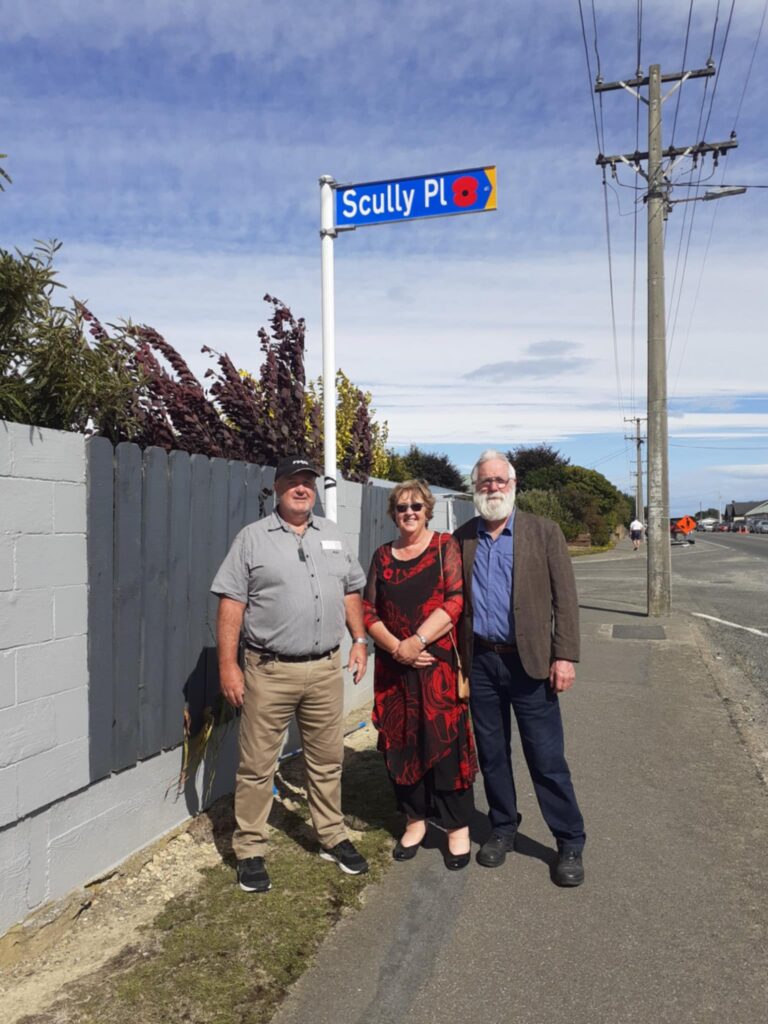
Peter’s name lives on in his hometown, with Invercargill naming a street after him – Scully Place, in Strathern just off the Bluff Highway.
The other Scully brother
There were 11 Scully children. Their parents, Michael and Bridget Scully, arrived in Bluff from Ireland in 1878 with their first child Thomas. Peter was their sixth son, born 6 October 1887 and Kathryn’s grandfather Michael was born two years earlier on 9 August.
Michael was a character who was remembered by the family more for his wild stories and sense of humour than his military exploits.
He died when Kathryn was just 18 months old, so much of what she knows about him has come from stories shared by her older siblings and other family members.
“My older brother told me Pop would stand guard outside the toilet while he was having a smoke so our parents wouldn’t catch him,” she remembers with a smile.
With his mischievous sense of humour, he told stories full of mystery and larger-than-life moments, so much so, says Kathryn, that often you couldn’t tell if it was true or not.
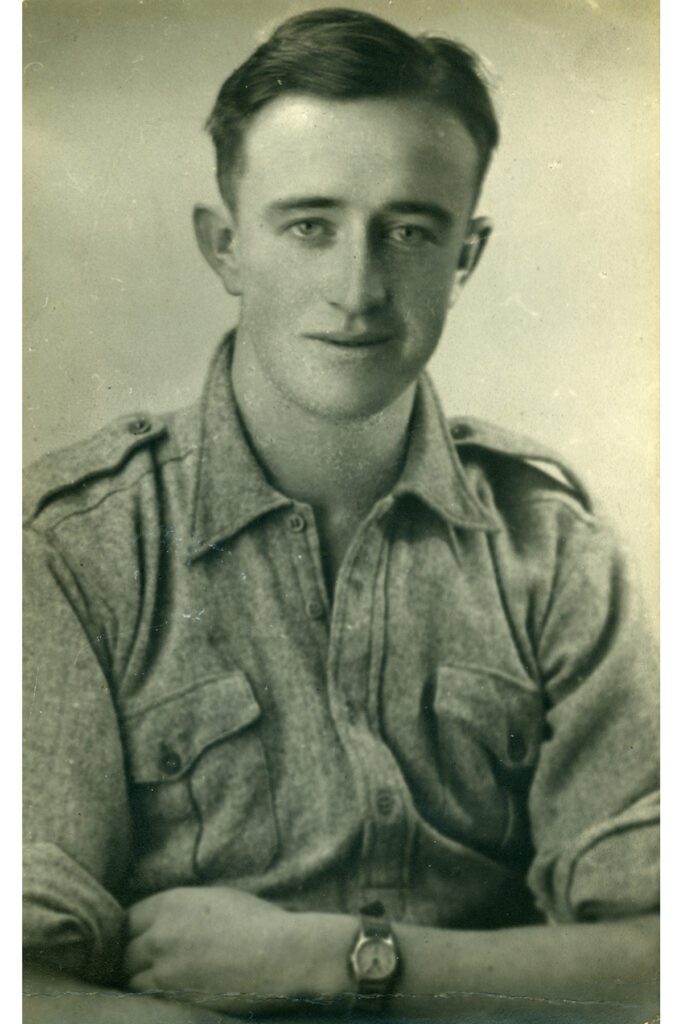
One of Michael’s famous family stories involved him supposedly jumping the fence at Buckingham Palace and having dinner with the Queen. The family dismissed it as one of his fantastical stories, that is until an old soldier mate of Michael’s confirmed the story. Well, elements of it at least, says Kathryn.
“His stories made him memorable that’s for sure.”
Like Michael, Kathryn’s father Ray who served in Italy during World War Two told a good yarn.
“He told a great story about being holed up with an Italian soldier in a wine warehouse in a port city that was being bombed. He said, ‘Wine tastes good in enamel’,” she laughs.
Yet, like many New Zealand families, the Scully’s talked very little about the traumatic side of war and Peter’s part in World War One.
“They never talked about Peter’s service. They probably didn’t want to relive it,” reflects Kathryn.
Pilgrimage to Le Quesnoy – and Te Arawhata
The impact of finding out more about Peter’s story, and his early death, as well as her grandfather’s and great uncles’ involvement in the war, compelled Kathryn and her husband Ian to visit Le Quesnoy and the NZ Liberation Museum – Te Arawhata in October 2025.
The European trip also included visiting extended family in Ireland.
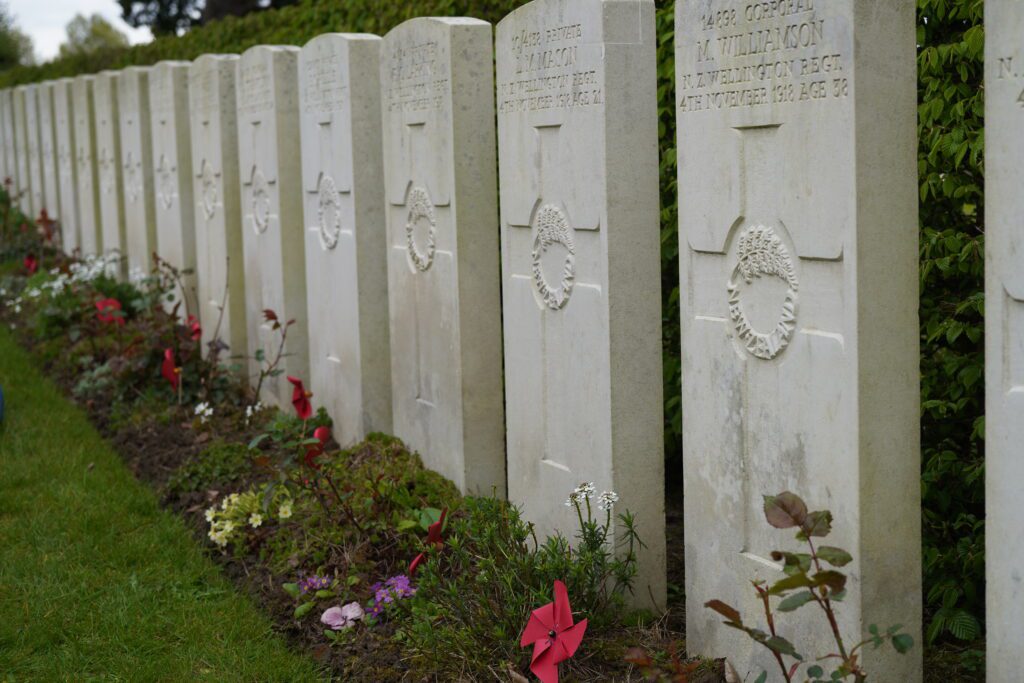
Kathryn and Ian found Le Quesnoy and Te Arawhata incredibly moving.
“It’s amazing what those soldiers went through. It was incredibly sad,” says Kathryn. “I know my husband well, and for him to be moved like that, that doesn’t happen very often.”
She loved the hundreds of personal stories revealed by the museum rather than having a preoccupation with military artefacts.
“It’s all about the personal stories. You don’t normally get that in a museum where you see the rifles and the uniforms … but you don’t hear the story. Te Arawhata is different and its very special. It tells so many stories, from the Kiwi soldiers and the towns people, and even German soldiers.”
Kathryn believes remembrance, such as attending ANZAC ceremonies, skipped a generation because she rarely went to Dawn Service with her family.
But she says proudly, her children, grandchildren and other younger members of the extended Scully family, have revived Anzac Day commemorations.
“They are really taking it on and I think that’s wonderful.”