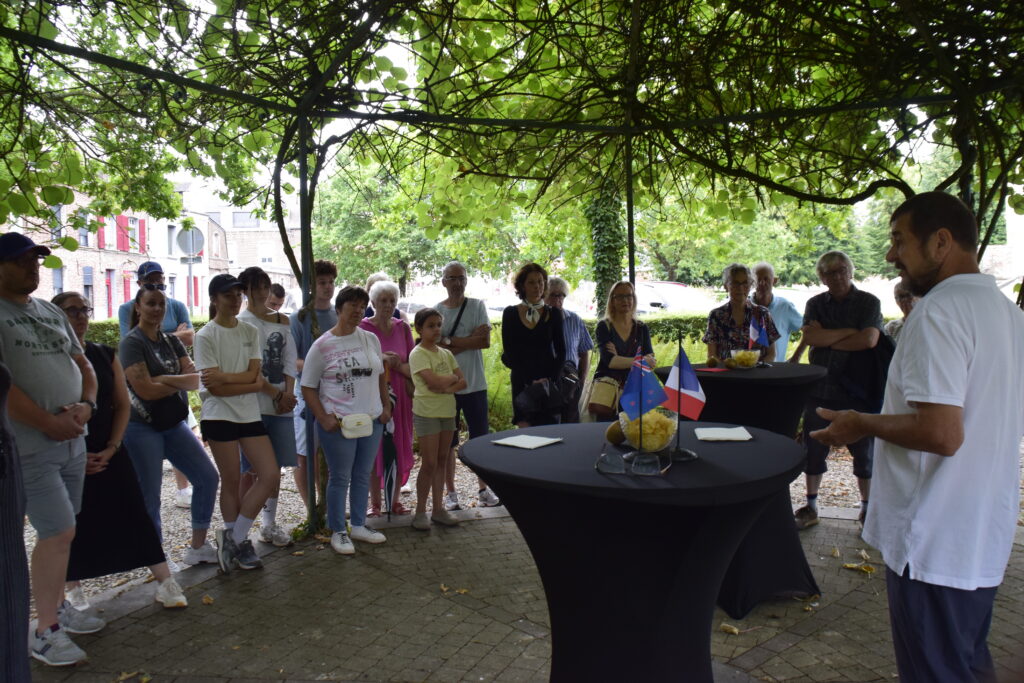
On Sunday 9 August, the Town of Le Quesnoy organised its first Dimanche de Caractère.
This event is part of the Petites Cités de Caractère label, a distinction awarded to towns and villages with remarkable architectural heritage that are committed to preserving it, promoting it and making it accessible to as many people as possible.
To bring the label to life, the town wanted to offer a walking tour followed by a convivial gathering over drinks.
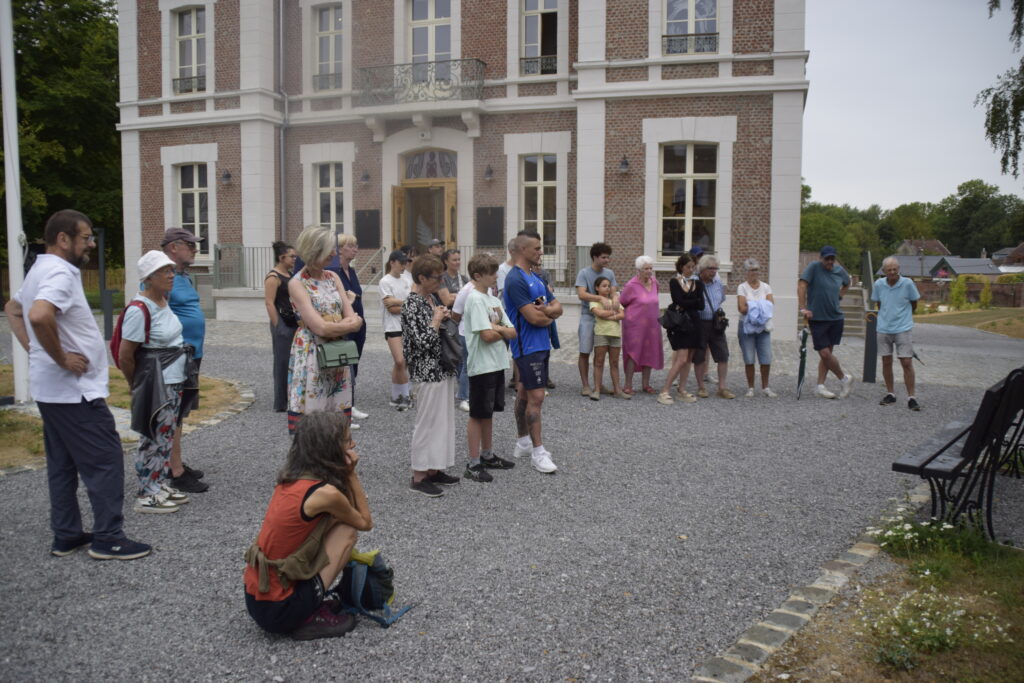
To offer visitors an original experience, moving beyond more traditional heritage tours, the Town of Le Quesnoy invited the New Zealand Liberation Museum – Te Arawhata to participate in the day’s programme.
Together, we imagined a journey through the streets of the fortified town and along its ramparts, with a real trip to the other side of the world as its guiding theme: New Zealand.
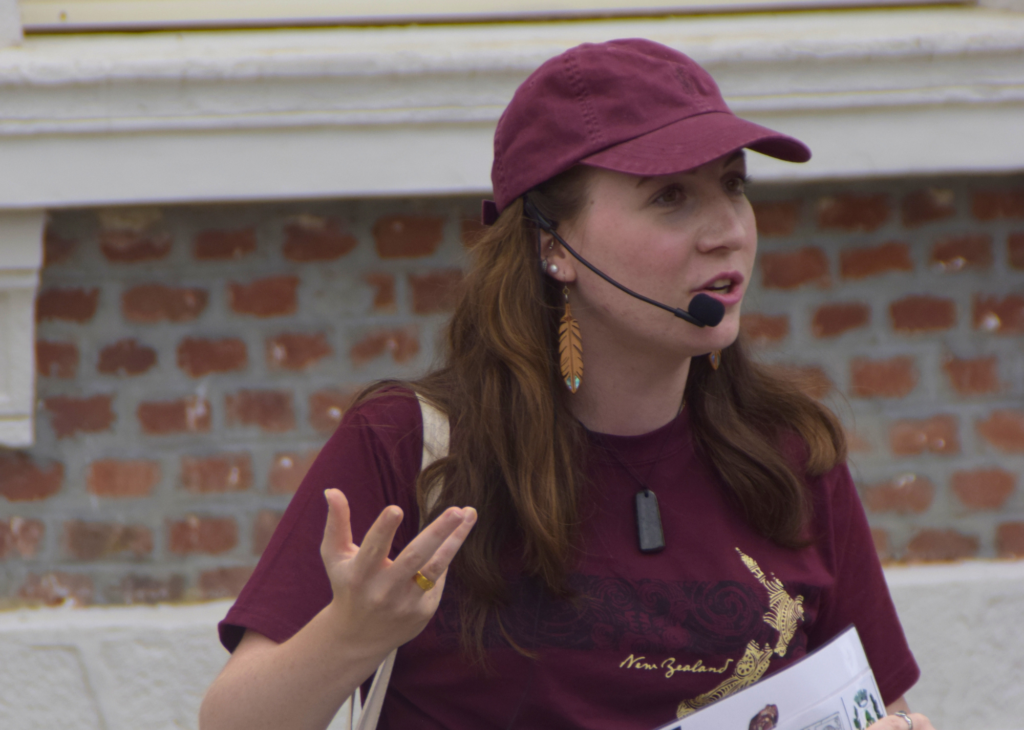
During the tour, Lindsay, our Museum Learning & Engagement Manager, guided participants in discovering the many New Zealand elements found throughout the town.
Visitors were able to see Māori motifs at the Museum, as well as the many representations of ferns, an iconic symbol of New Zealand, scattered throughout the town.
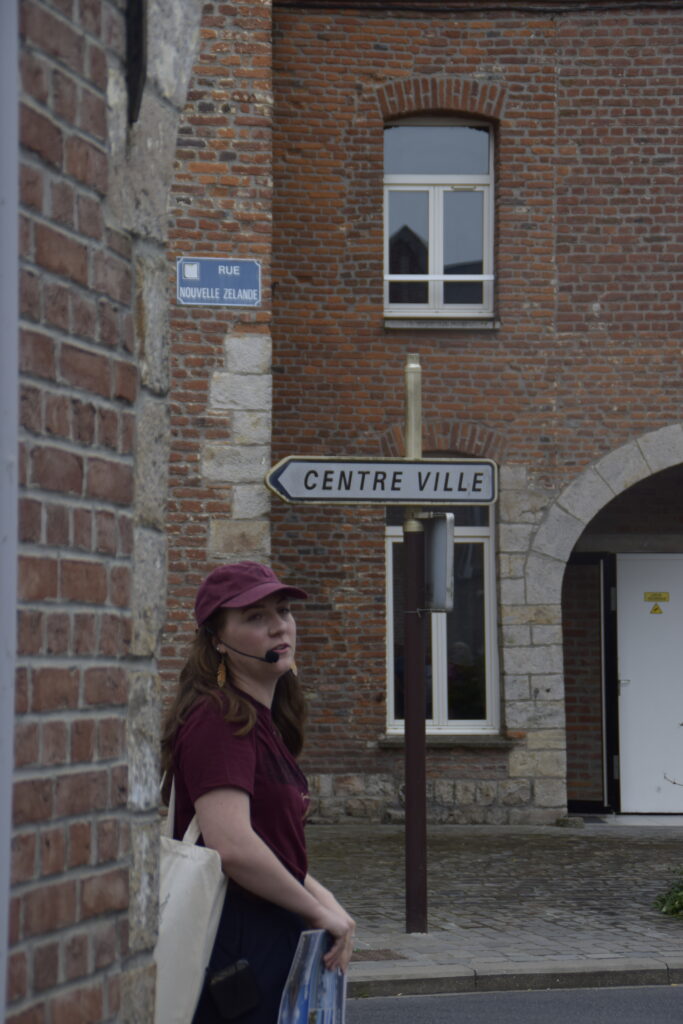
The tour then stopped on Rue Nouvelle-Zélande, whose second street sign also bears its Māori name: Aotearoa. This provided an opportunity to explore the origins of the name.
According to legend, when the Polynesian navigator Kupe first saw the coast of New Zealand, his wife is said to have cried out, “He ao tea roa!” (“a long white cloud”), referring to the clouds visible above the land they could see on the horizon.
This story provided an introduction to the history of the arrival of the first Polynesian peoples and the settlement of Māori in New Zealand.
The tour continued along the ramparts, where participants were surprised to meet Major Harold Barrowclough in a room known as the “Briefing Room”.
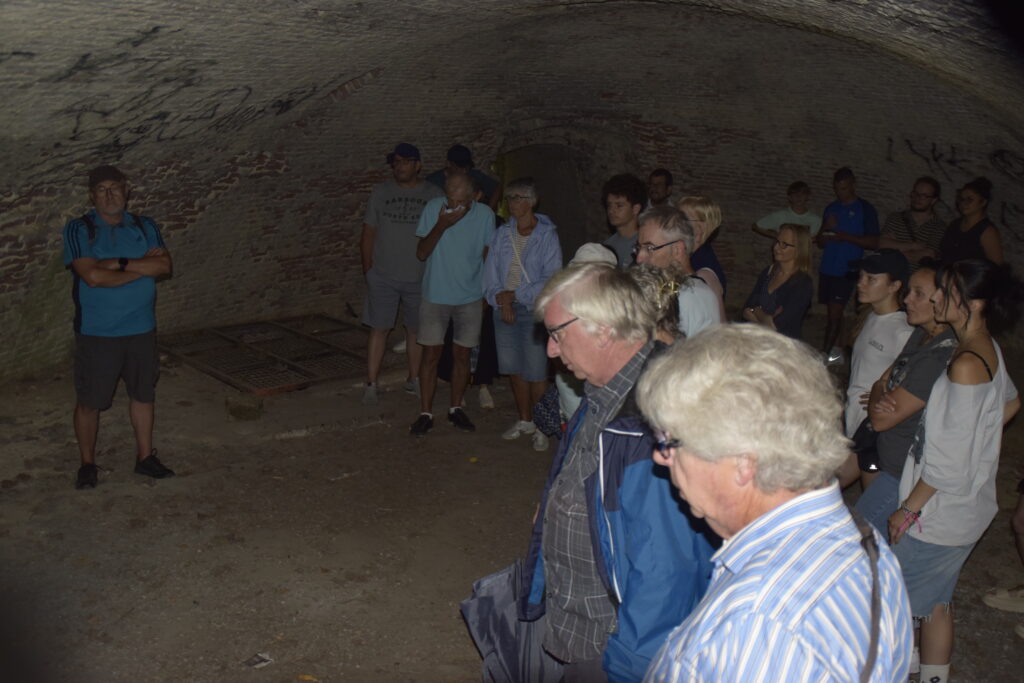
For the occasion, this character was portrayed by Jacob, our Museum Marketing and Operations Manager.
Visitors were able to discover the essential, but often little-known, role played by this New Zealand officer in the liberation of Le Quesnoy. It was in fact Harold Barrowclough who came up with the bold idea of using a ladder to scale the town’s ramparts.
After the traditional visit to the New Zealand Memorial, the tour concluded on Place des All Blacks.
This final stop provided an opportunity to explore the All Blacks’ various visits to Le Quesnoy.
Participants also learned more about the rugby relationship between France and New Zealand, as well as the commemorative significance of the Dave Gallaher Trophy.
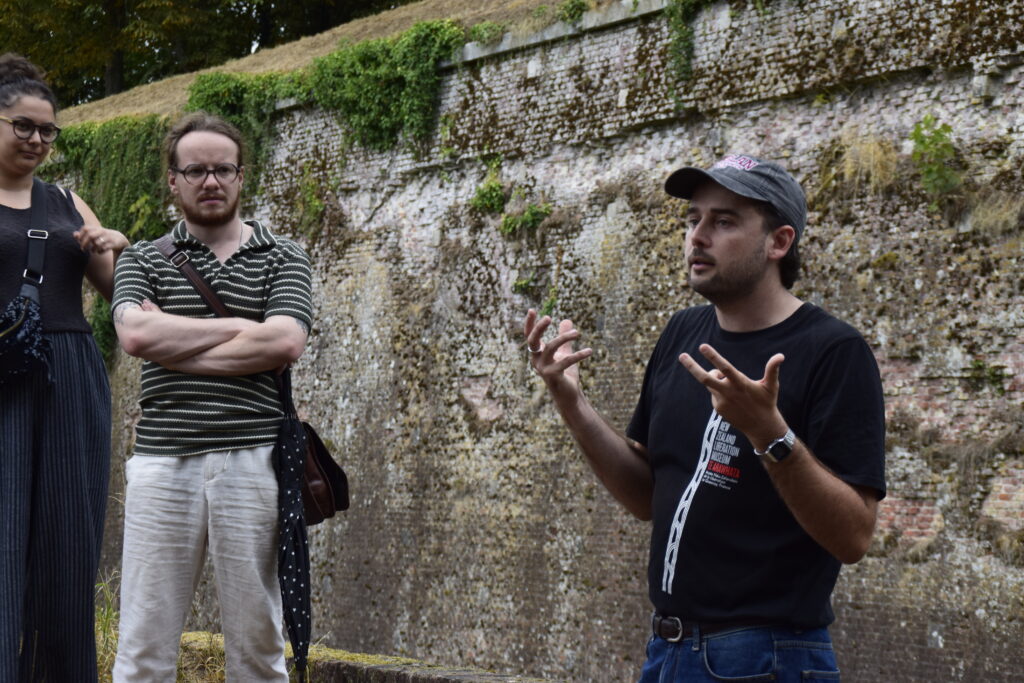
The trophy honours the former All Blacks captain and, more broadly, the service of the 93 New Zealand international players who served during the First World War. Thirteen of them lost their lives in combat, including Alexander Ridland, who was killed during the liberation of Le Quesnoy on 4 November 1918.
The walk concluded with a convivial gathering at Square Chêne et Fougère. This provided an opportunity for visitors to discover the twinning between Le Quesnoy and Cambridge, New Zealand, as well as the work carried out by the Le Quesnoy Nouvelle-Zélande association to maintain these bonds of friendship.
To round off the experience with a taste of New Zealand, participants were able to enjoy kiwi pavlovas and ANZAC biscuits, accompanied by apple and kiwi juice. It was a lovely nod to two iconic fruits: the apple, a symbol of the Quercitain region, and the kiwi, inseparable from New Zealand’s identity.
This original tour was a great success with the public, who particularly enjoyed discovering New Zealand history and culture through the streets of Le Quesnoy. The Museum hopes to offer this activity again in the future and continue this wonderful collaboration with the Town of Le Quesnoy as part of Dimanche de Caractère.