Recent visitors to Te Arawhata know that hundreds of New Zealand’s troops were not mounted on horseback, but in the saddle of the humble bicycle. The New Zealand Cyclist Corps was an innovative and mobile unit designed to be the cavalry of a new era of warfare.
But what if we told you that this new era began decades earlier, and by the time of World War One, the “soldier-cyclist” was present in all theatres of combat and all modern armies?
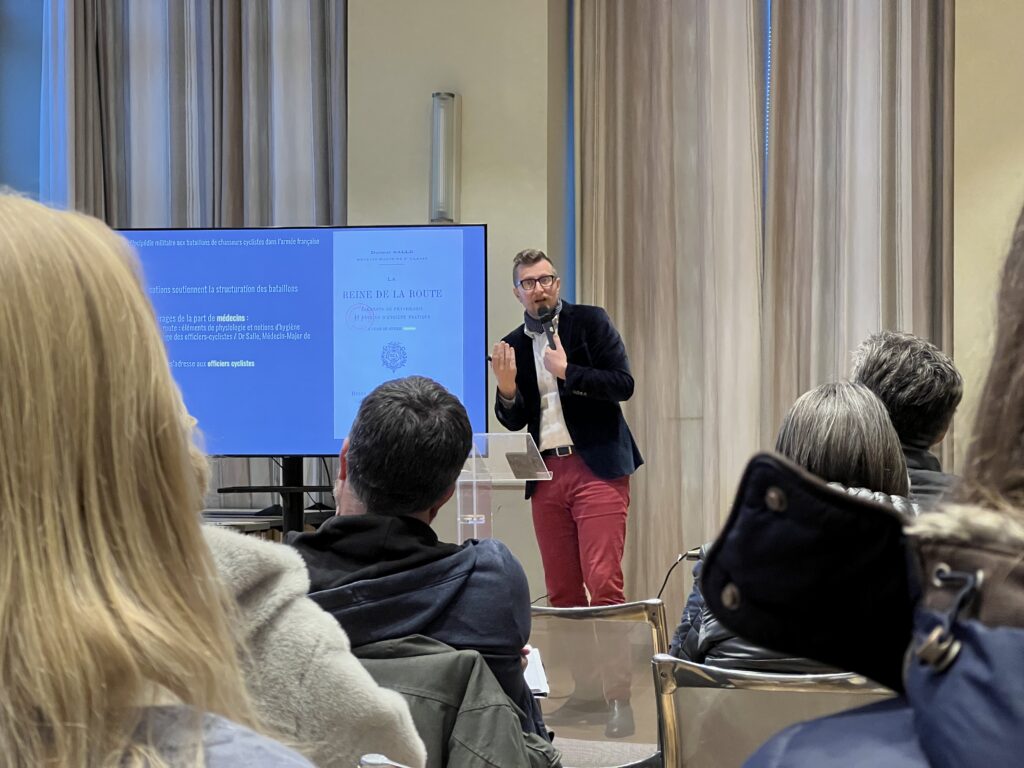
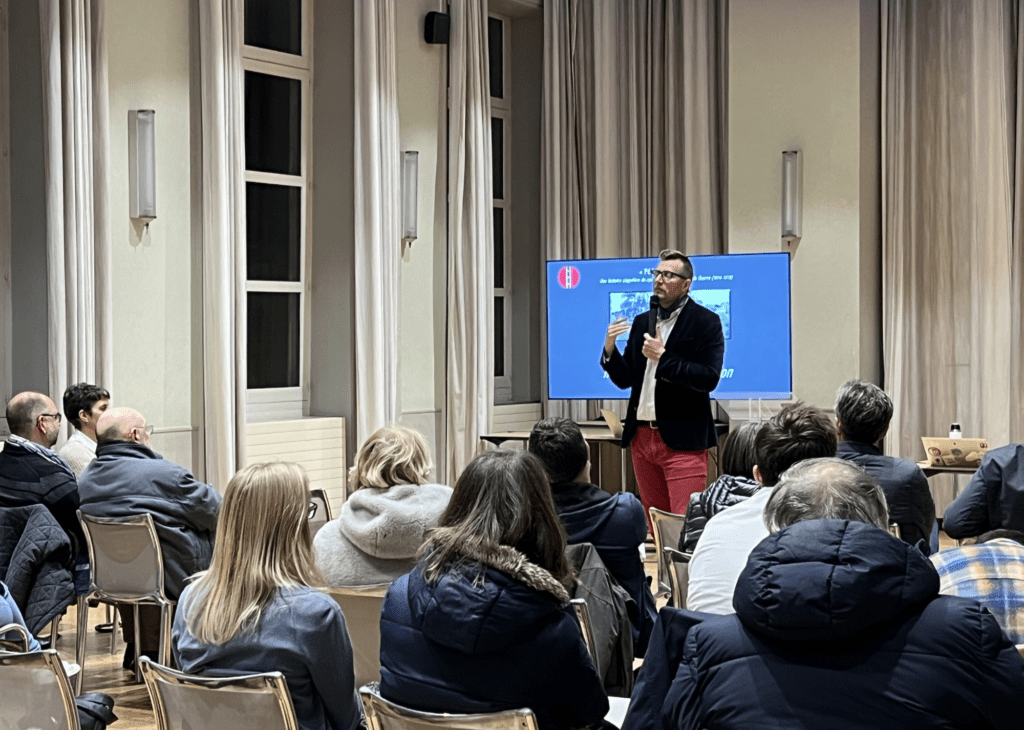
University of Lille lecturer Arnaud Waquet returned to Le Quesnoy this month to share his research into the role of the bike during early 20th century conflicts.
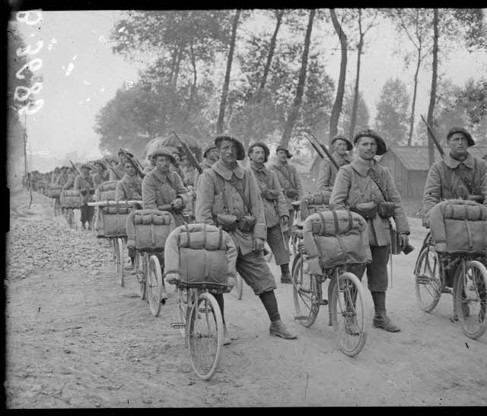
Far from an afterthought, the bicycle was a core aspect of the modern army. Cheap to produce, easily replaced and – crucially – happy to keep moving without food or water, the bike was seen as an effective replacement for the horse. It didn’t sleep or spook, and while it did place the kinetic emphasis on the rider, it was clear that a soldier’s endurance was easier to predict than that of a horse.
Arnaud shared that Britain’s military interest in the bike emerged in the late 19th century and reached a crescendo in the Second Boer War (1899-1902). Over 16,000 soldier-cyclists already existed in the British ranks.
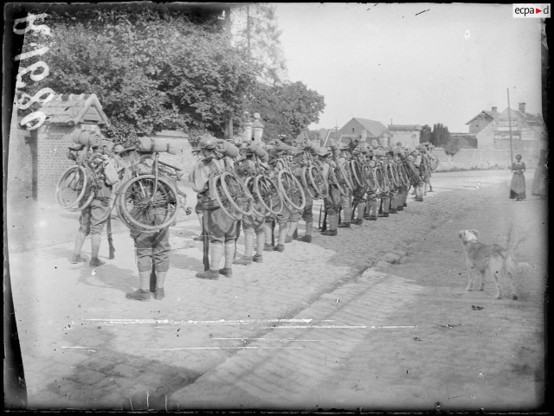
On the French side, the popularity of the Tour de France and other continental cycling classics prompted large investments into cyclist corps. A key innovation was the invention of the folding bike, which, for its inventor Lieutenant Henri Gérard, “must allow the cyclist to carry his bike wherever the bike failed to carry him”. At around 13 kilograms, the folded bike was actually lighter than a standard infantryman’s pack and supplies.
Further innovations followed, both for the front and behind it: tricycles loaded with machine guns; eight-man cycle machines designed to slot onto train rails; and hand-propelled bikes for the wounded soldier.
After the Armistice, cycling would even serve as propoganda. Just days after the signing of the Treaty of Versailles, the 1919 edition of the Tour de France passed through the newly-reacquired French territory of Alsace-Lorraine. The message was clear: this land is French once more.
Arnaud’s conference was the third held as a partnership between Te Arawhata and the University of Lille. We look forward to presenting more talks like this into the future!