
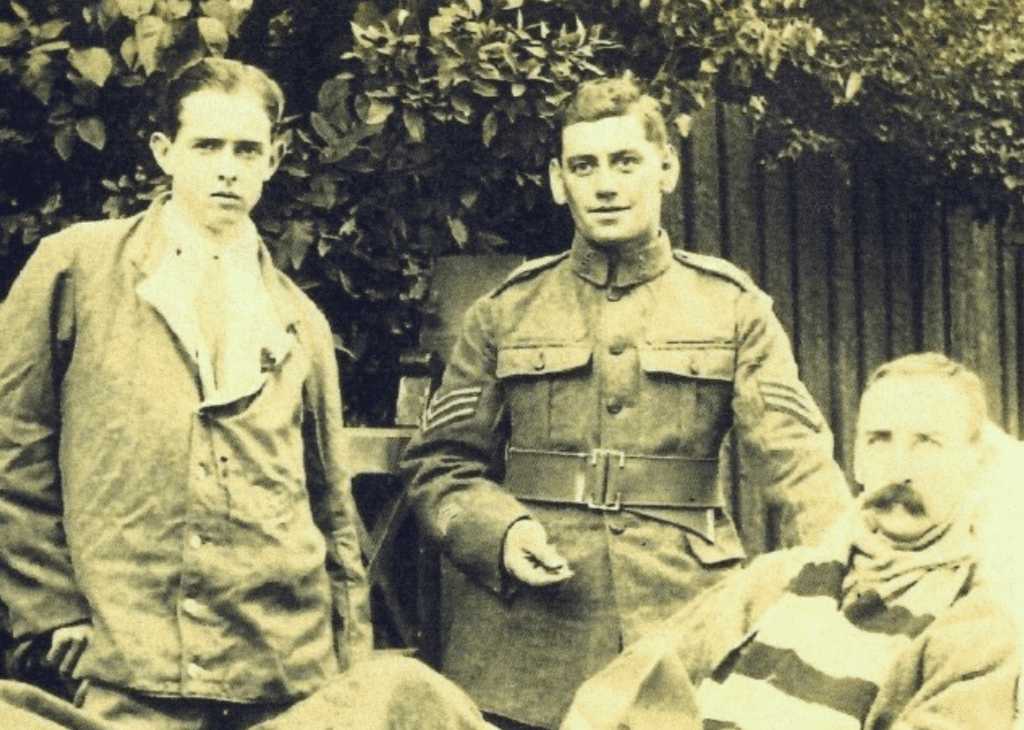
Lure of Le Quesnoy uncovers rich family legacy
The death of Andrew Shaw’s great great uncle on October 29, 1918, marks a sad yet special day
Standing in a paddock on the outskirts of the French town of Le Quesnoy, Andrew Shaw looked out over the fields and thought to himself: “He was here.”
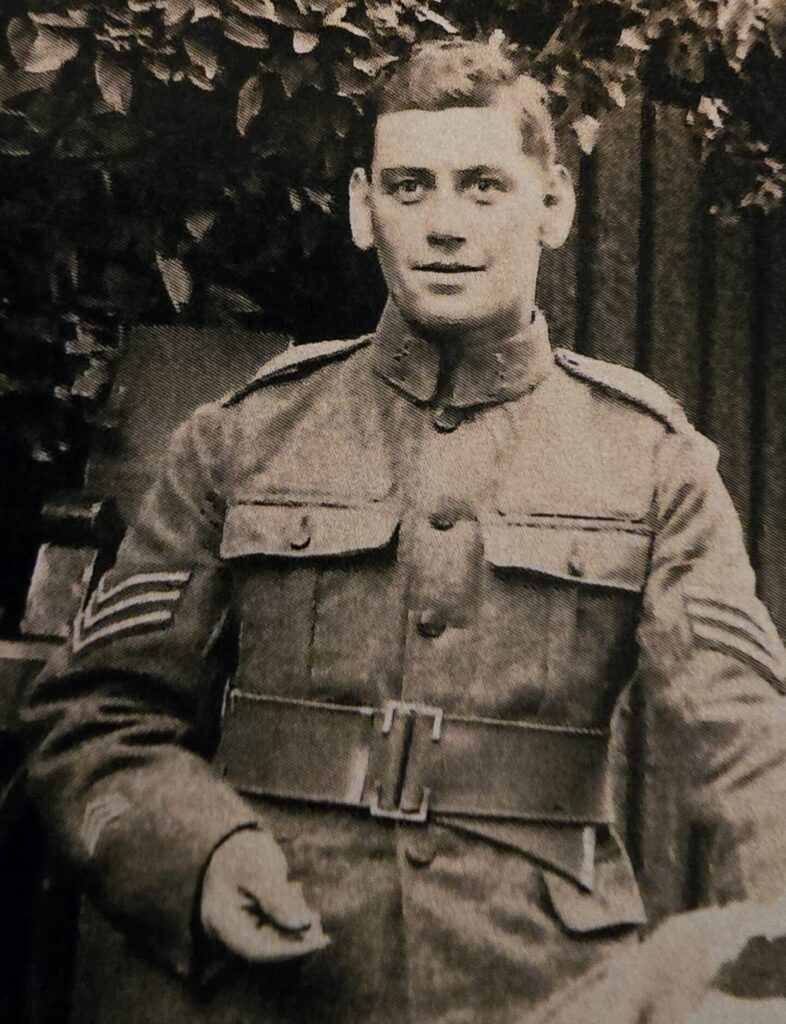
On, or very near, the spot he was standing was the makeshift grave site where his great great uncle William Cunningham was buried after being killed on October 29, 1918, during World War One.
“On that date there was a huge artillery bombardment from the German side,” says Andrew who researched war records, maps of the area, and diaries to locate where William was buried in a temporary battlefield grave.
“So perhaps, in the early hours of the 29th, William was out patrolling, testing weak spots in the German defences in the week leading up to the liberation of Le Quesnoy on November 4. Unfortunately, he met his end there.”
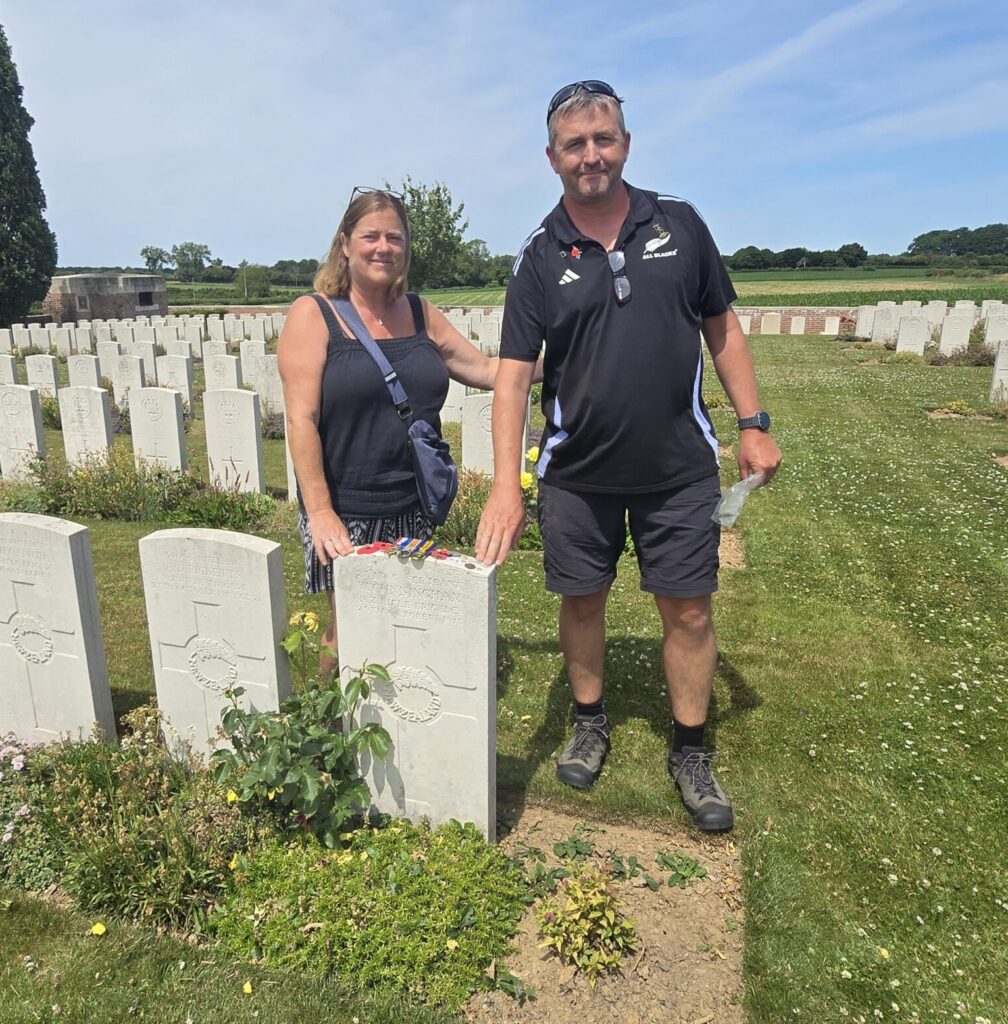
Andrew and his wife made the pilgrimage to Le Quesnoy and the NZ Liberation Museum – Te Arawhata in 2025. The visit was the culmination of 15 years of research by Andrew to find out how and where William died after leaving New Zealand on October 9, 1915.
“Although, I wouldn’t say it was closure, because I’m still researching,” he smiles. “The journey has a very special place in my heart because I do feel a strong connection with the history and the events that happened over 100 years ago. I was honoured to find William’s resting place.”
Andrew believes William, and the many other New Zealand soldiers who lost their lives in the days before the Le Quesnoy offensive, were key to setting the stage for Kiwi troops to famously scale the walls of the fortified town by ladder.
“A lot of the history around Le Quesnoy is from November 4 onwards and I haven’t found too much about the week before. That’s when they were probing the area around Le Quesnoy so I think he’s part of the story.”
During his research he discovered many other soldiers were buried nearby, including a fellow Kiwi Sergeant.
“He and William must have been out on some sort of patrol together. But there were hundreds and hundreds of these [temporary] graves everywhere.”
When he visited the farm, the original buildings and house remain more than 100 years on. “When I felt the dirt on my hands in the field and looked from the farm back to the walls of Le Quesnoy, it was incredibly emotional thinking about what had happened there on the 29th of October 1918.”
A sad but special day
The day William Cunningham died became a poignant and significant date for Andrew’s family. His auntie Linda on his mum’s side was born on October 29, as was Andrew’s youngest son Daniel.
“The connection is extremely strong, and it was pulling me to get to Le Quesnoy and find him,” says Andrew.
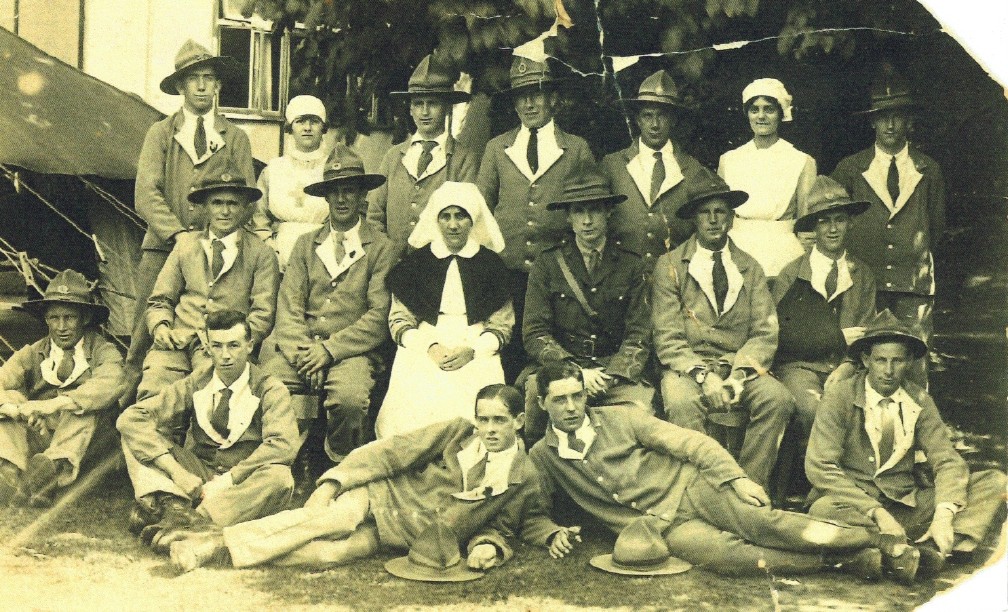
To add to the family’s First World War legacy, William’s brother and Andrew’s great grandfather, James Cunningham, also fought on the Western Front.
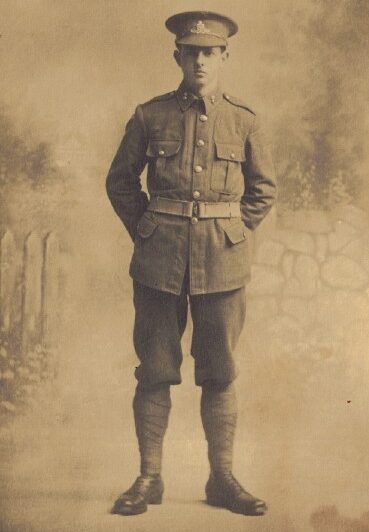
Born in 1897, James departed New Zealand for Plymouth in England on April 26, 1917, with the 25th Reinforcements J Company as part of the NZ Rifle Brigade.
Both brothers were wounded in March 1918 – William in the thigh and James in the lower back hip.
“William recovered and he went to see James, who was badly wounded, in hospital in August. William then went back to the front line in October and that was when he was killed. James was sent home,” says Andrew.
Records show James first married in 1924 in New South Wales however the marriage ended in 1935. He raised his daughter Eileen, who was Andrew’s Nana, and his mum Gayle’s mother, back in New Zealand.
“Unfortunately, it was difficult to find out much about James, especially during the 1920s because his footprint was very vague throughout those years. We do know he remarried and had another son. Sadly, James passed away on 22 March 1940 and he was living in Langholm in Auckland.”
William’s final resting place
Back in France, throughout the year of 1920, as farmland was reclaimed and made productive again, bodies buried in temporary graves like William’s were reinterred at formal cemeteries.
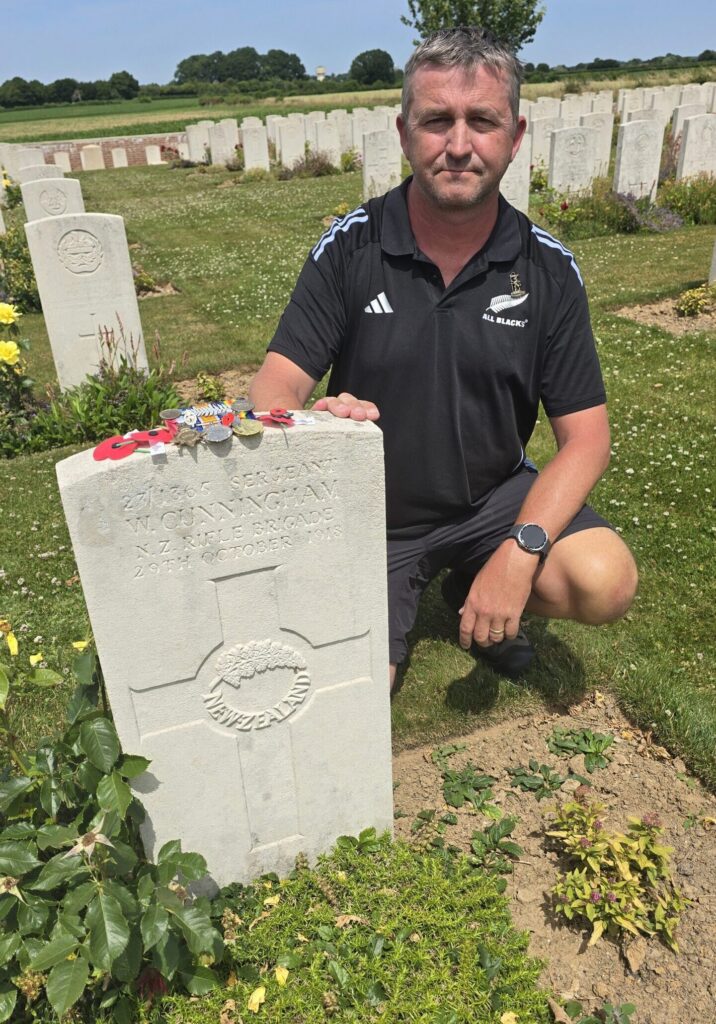
William was moved to Crossroads Cemetery in Fontaine-au-Bois where he lays in plot 2.f.28.
“Crossroads Cemetery is the most peaceful place. When we were there, the birds were chirping, the sun was out, and there was no noise. Silence.”
“I walked straight down the middle, looked, and there was his grave. We are very, very lucky he has a grave. There are so many who haven’t got a grave. So, to be able to stand in front of the grave, I feel very humbled.”
He makes special mention of The Commonwealth War Graves Commission and the incredible work they do to maintain sites across France and Belgium.
“A lot of people say why weren’t they brought home. I think where he is now, with his friends or whoever was with him at the time, I think that’s important. I couldn’t think of a better place for him to be resting in peace.”
A place of pilgrimage
As part of the 2025 trip Andrew and his wife travelled to key World War One sites including Messines Ridge, Passchendaele and the Somme.
He recalls the Last Post ceremony at Menin Gate memorial in Ypres: “There are over 54,000 soldiers’ names on the walls of the memorial. Every night, rain, hail or shine, they do the Last Post. Words can’t explain it.”
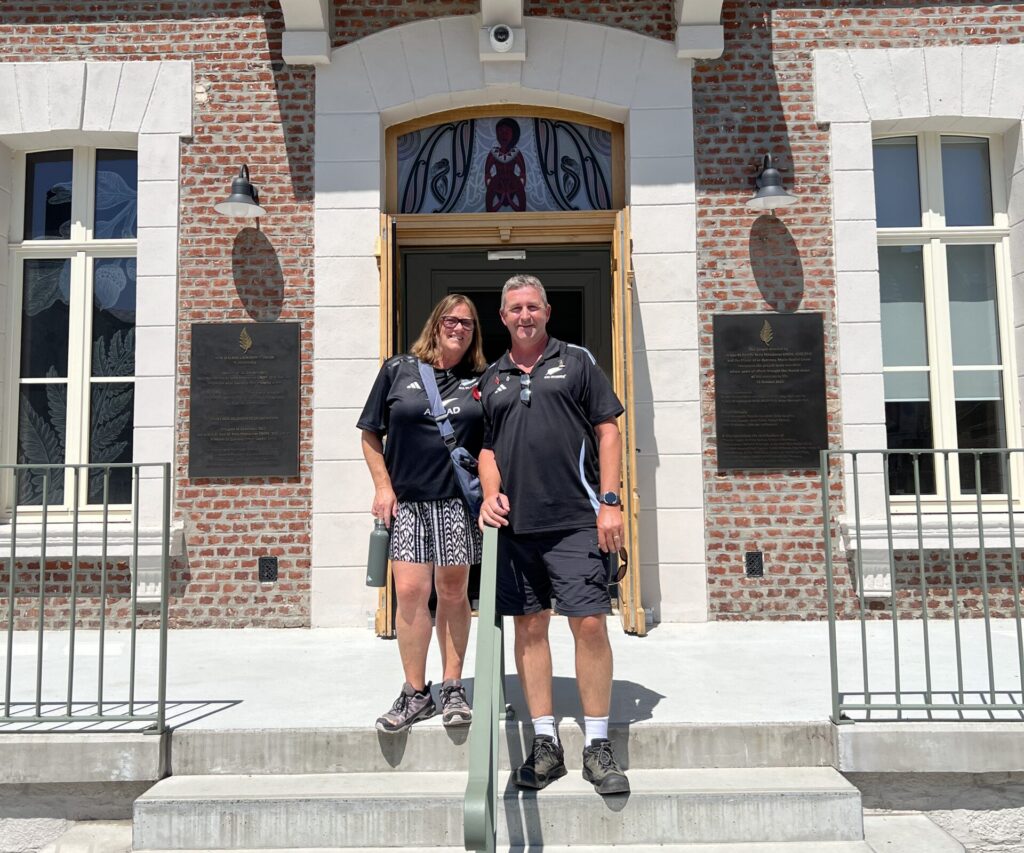
Their final destination on the Western Front was Le Quesnoy, including a tour of the NZ Liberation Museum – Te Arawhata.
“The museum is a real credit to New Zealand. It felt like home,” he says.
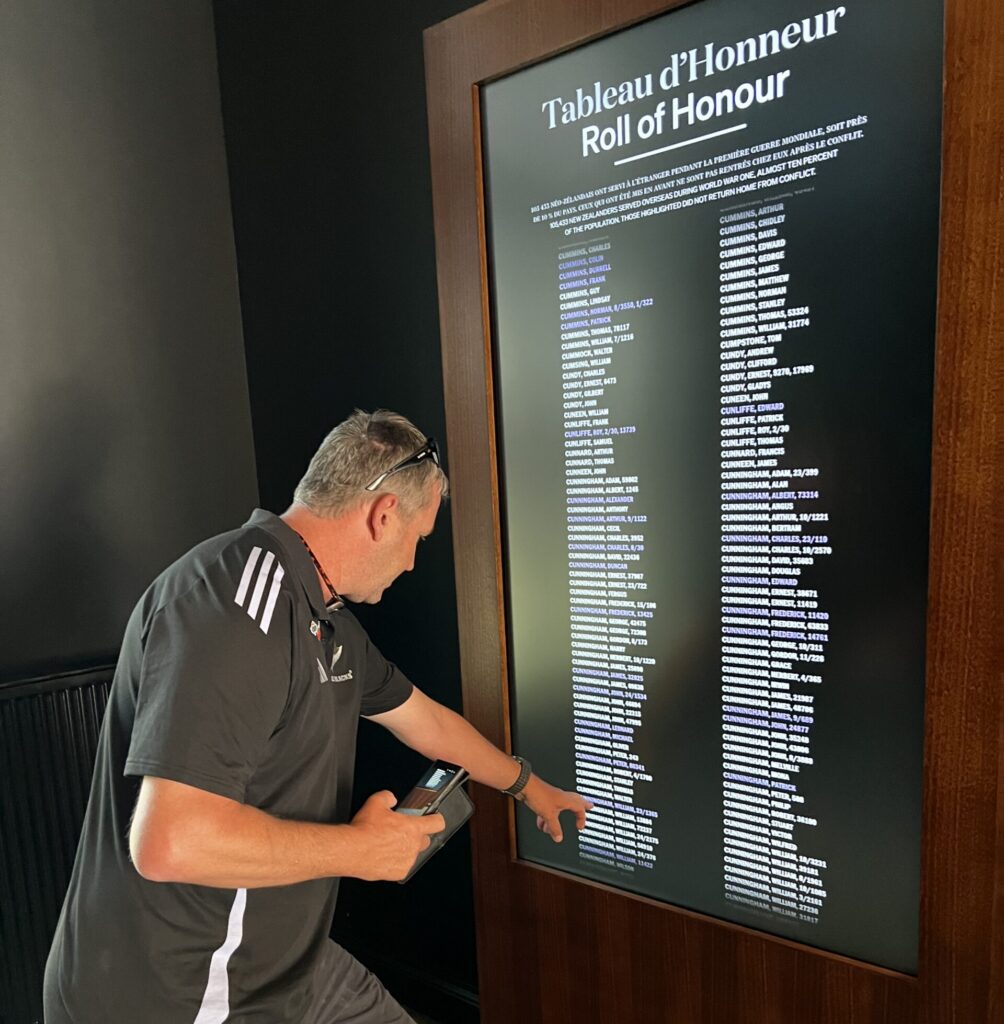
He was moved by the Museum’s revolving Roll of Honour which lists the names of every New Zealand service person to go abroad during the First World War. “It takes eight hours to scroll and I was lucky enough to see William’s name come up.”
By sharing the stories of William and his great grandfather with the Museum he wants to ensure they will not be forgotten.
“By putting it on social media, it’ll stay there online hopefully well after I’m gone, and they will always be remembered.”
With this, he reflects on the losses not only New Zealand and France endured, but those of German families.
“German people lost fathers and sons as well. War is such as dreadful waste of life at the end of the day. Travelling to Le Quesnoy and the many other special locations in France and Belgium is a journey we will never forget. I was so proud to represent our family and may all those who served rest in peace.”