
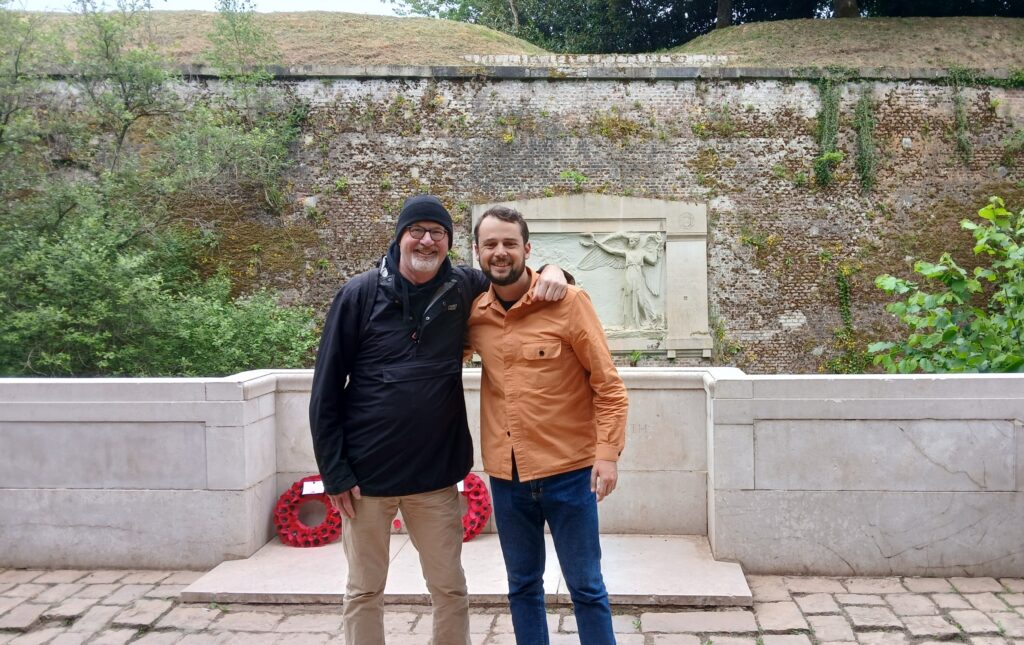
Inspired by his grandfather, who served in Italy during the Second World War, Dean O’Connell began researching his family’s military history in 2019. What started as a simple desire to better understand his grandfather’s past soon grew into a remarkable and ongoing journey through generations of service.
As a child fascinated by military history, Dean remembers being captivated by his grandfather’s service medals and wartime memorabilia. “They felt like treasure,” he recalls. “They inspired so many imagined adventures.” He knew that his grandfather had served in Italy and that two of his great-uncles had died during the First World War. That knowledge became the starting point for a much larger exploration.
Dean is quick to clarify that he is not a trained historian. His research began modestly, with a few bullet points written so his children could better understand their great-grandfather when attending ANZAC Day commemorations. But the more he uncovered, the more compelled he felt to continue. Today, Dean has traced and documented the war service of more than 300 family members, both close and extended.
His research spans conflicts from the New Zealand Land Wars and the Anglo-Boer War to the First World War, revealing how deeply military service is woven into his family’s history. This work became Families in the Service of their Country, a personal yet expansive record of relatives who stepped forward when their country needed them.
One of Dean’s main goals was to visit the graves of family members buried in Europe. Having previously travelled to Ypres and Gallipoli in the late 1990s, he returned to Europe in April 2025 to continue this pilgrimage. During this journey, he visited numerous Commonwealth War Cemeteries in southern Belgium and northern France, as well as the New Zealand Liberation Museum – Te Arawhata in Le Quesnoy.
Among the most personal moments of this trip was visiting the graves of his great-uncles, Patrick Shelley and James O’Connell. Patrick left New Zealand in 1914 and later rejoined the New Zealand Expeditionary Force after being discharged due to illness. James departed in 1916. Both men were wounded on the Western Front and later died as a result of their injuries. Patrick is buried at Bagneux British Cemetery, while James rests at Dozinghem Military Cemetery.
“These stories, alongside my grandfather’s, really drove home why I needed to keep going,” Dean explains. “They made me want to understand not just their experiences, but the experiences of all the men and women in our family who answered the call.”
Another important chapter of Dean’s research focuses on three extended family members, James Boyle, Laurate “Laurie” Goodwin, and Walter Roebuck, who took part in the liberation of Le Quesnoy on 4 November 1918. Although they shared different surnames, Dean uncovered their family connection through marriage within the Spurdle line, a recurring name throughout his family tree.
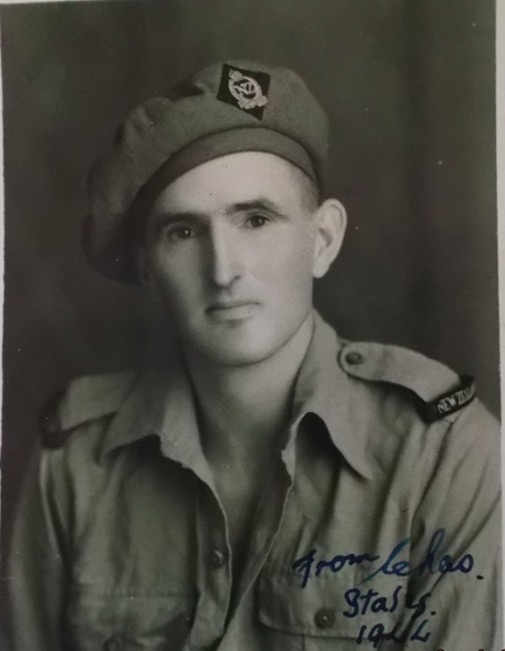
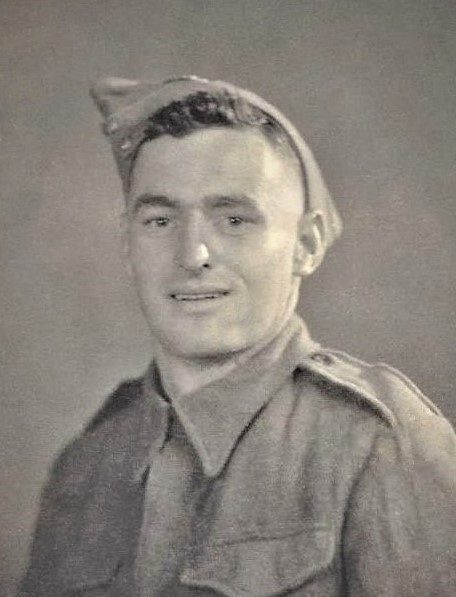
The liberation of Le Quesnoy was particularly challenging. Because of the town’s historic significance, Allied forces chose not to bombard it, making the operation far more complex. Through Dean’s research, the individual roles of Walter, Laurie and James emerge as part of a carefully coordinated and collective effort.
Walter, serving with the 2nd Battalion, helped secure the railway line northwest of the town under heavy machine-gun fire. Laurie, also with the 2nd Battalion, supported operations as the 4th Battalion advanced toward the ramparts. James played a key role in covering the soldiers who famously scaled the walls using ladders. While the image of those ladders has become iconic, Dean emphasises that the success of the operation relied on surrounding the town and applying pressure at multiple points.
“Standing where the ladders were placed makes you realise that no single individual did this alone,” Dean reflects. “They were part of a highly trained division, working together toward a larger plan.”
Beyond battlefield tactics, Dean’s research highlights the wider impact of war on families and society. Seeing repeated family names, fathers, sons and brothers, illustrates how few households in New Zealand were untouched by the conflict. “When you think about parents with four or five sons away at war, it really brings home the fear and uncertainty they must have lived with,” he says.
Visiting Te Arawhata proved to be one of the most emotional moments of Dean’s journey. “I didn’t quite expect what I saw,” he admits. “The museum is incredibly moving. It deepened my understanding not only of the New Zealanders who liberated the town, but also of the enduring bond between New Zealand and France, and the suffering endured by the people of Le Quesnoy during occupation.”
Through his work, Dean has also reconnected with relatives around the world, sharing stories and uncovering long-lost links. For him, this research is not only about the past, but about transmission, ensuring that these stories are remembered, understood, and passed on to future generations.