Paul Clark can’t remember missing an Anzac Day Dawn Service. It’s a special day for the Clarks.
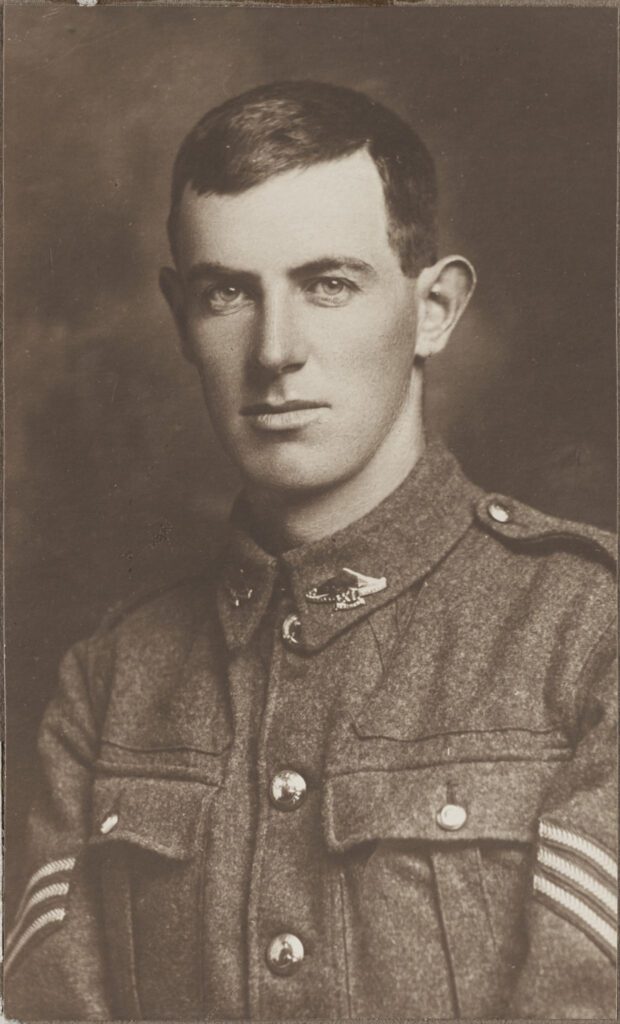
Paul’s grandad Horatio Clark, who won the Distinguished Conduct Medal (DCM) for his part in the liberation of Le Quesnoy during World War One, passed away aged 79 after marching in the Sydney ANZAC parade in 1975.
“He was a flagbearer. He finished the march and turned to his mate and said, ‘Oh, that was wonderful’ and then had a massive heart attack and lights out,” remembers Paul with his family’s trademark sense of humour.
“I was eight years old. He was beautiful, a really loving dad and koro,” he says from his and wife Lisa’s Hamilton home.
A mix of cheeky humour and deep emotion comes through in all of Paul’s stories. He recalls one year travelling from New Zealand to Sydney for the ANZAC parade with his father, Bill, who had just turned 80.
“I said to him, ‘You’re not going to let bloody history repeat here are you, Bill?’.”
The good news is, Bill marched proudly in memory of his dad in Sydney and passed away several years later in August 2019 aged 89 (just three weeks shy of his 90th birthday).
Horatio, more than just a soldier
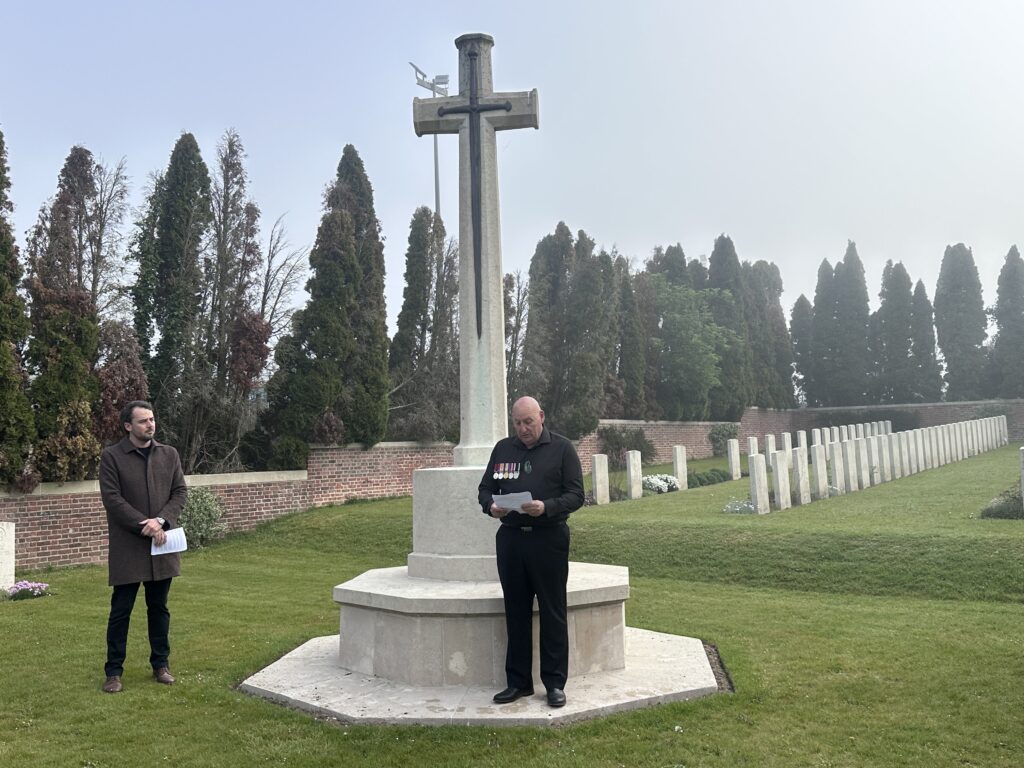
On Anzac Day this year, Paul shared his memories of Horatio in a dawn service organised by the New Zealand Liberation Museum – Te Arawhata and held at the Le Quesnoy Communal Cemetery Extension – the final resting place of 138 Commonwealth soldiers, including 50 New Zealanders.
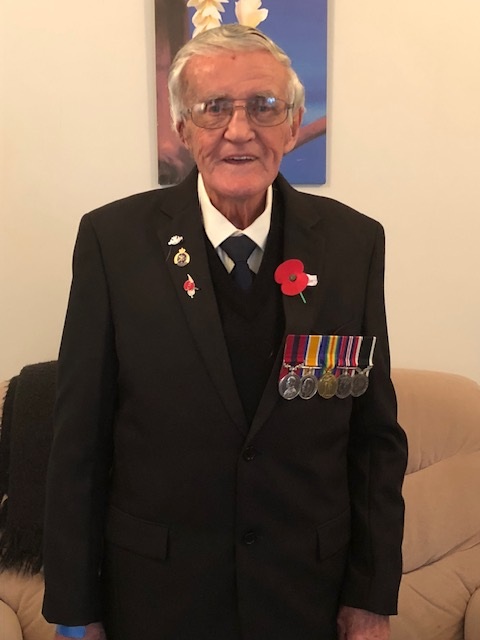
Paul Clark at the Le Quesnoy Communal Cemetery Extension on Anzac Day 2026.
He wore Horatio’s medals and talked proudly about his grandad’s life. He read the military citation highlighting Horatio’s “most conspicuous courage and good work east of Le Quesnoy on 4th November 1918”.
The story goes that during the attack Horatio’s company had been split up meaning he had to work “single-handed, fearlessly entering cellars [inside Le Quesnoy] alone and capturing many prisoners”.
Yet Paul’s intention with his speech was to talk about Horatio not just as a war hero and soldier.
“I talked about him as my grandad,” he says, his voice breaking. “It was humbling. It was hard. I’m about to tear up just thinking about it.
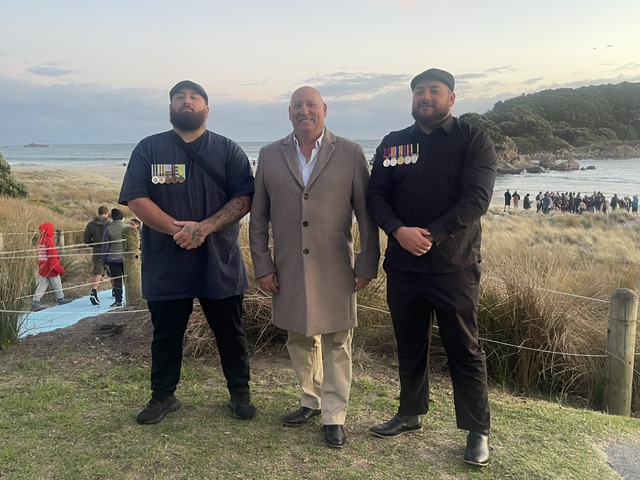
“I know when I was delivering that speech just how proud my dad would have been. He made Anzac Day central to family identity. Dad made it part of our DNA. Now, three generations carry the medals because my three boys march [on Anzac Day] with a medal each too.”
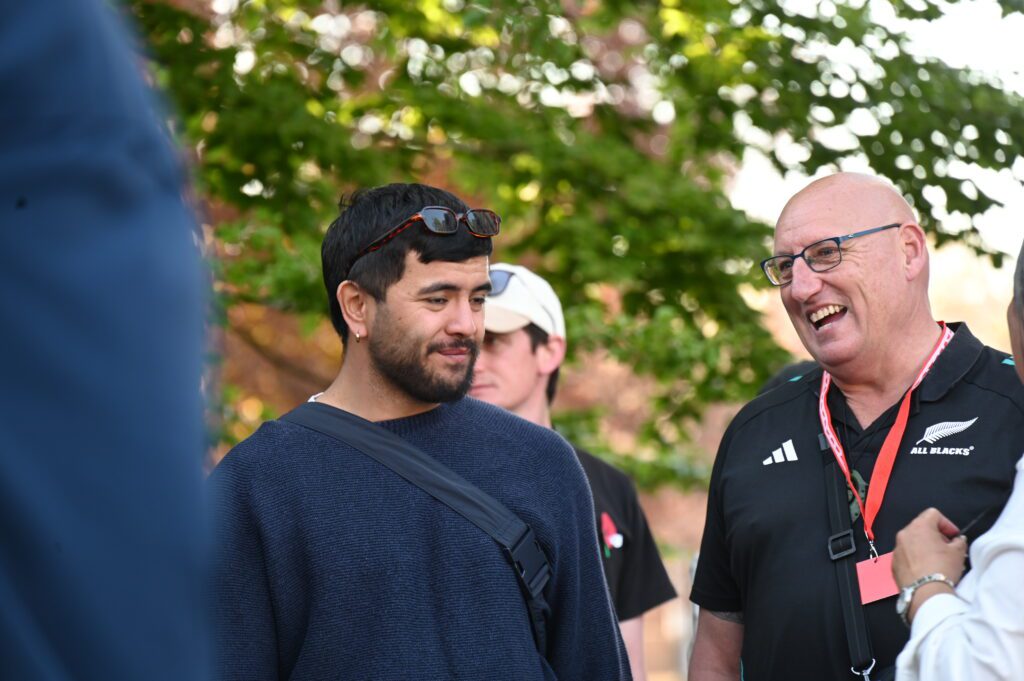
Paul and sons Dane (left) and Dylan.
Portrait of a loving koro
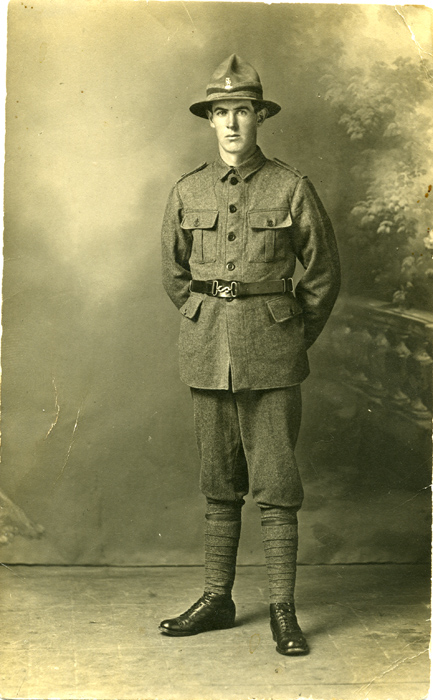
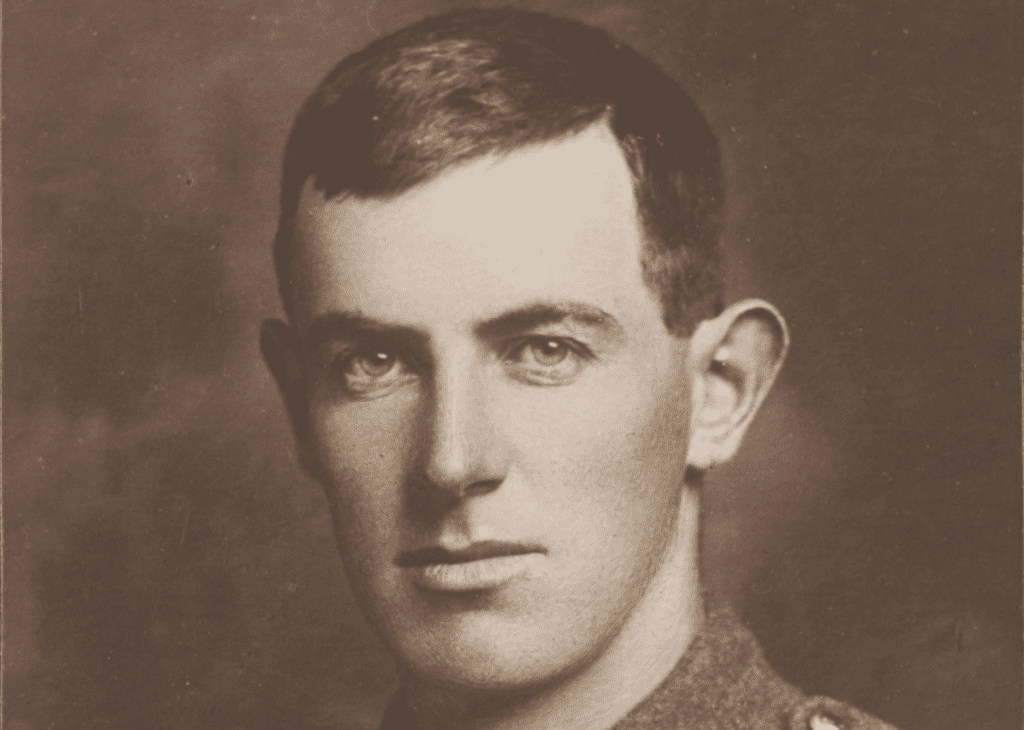
Born in Turakina, a small settlement south-east of Whānganui, on October 21, 1895, Horatio enlisted as a 20-year-old in 1916. The shearer turned soldier served with the 1st Wellington Battalion and New Zealand Rifle Brigade on the Western Front during World War One.
Horatio Clark
After the war he returned to New Zealand, settling in the State Highway One junction town of Bulls, just down the road from Turakina.
He married Alice and they raised their family with “a mix of love, routine and care”.
“Dad said that grandad was quite strict as a father. But I never saw that, because you’re always a softer version of yourself with your grandkids,” laughs Paul.
Horatio was a shearer until the outbreak of WW2 when he re-enlisted, serving in the Home Guard at Ohakea not far from Bulls.
Sadly, Paul never met his nana Alice, who passed away several years before he was born.
But even though he was very young, he remembers vividly driving from Waiouru to Bulls every Sunday to spend the day with his grandad.
“He lived on a lifestyle block with a big old cottage, three paddocks, and he had sheep and a cow for milking.
“We’d go down to his place, and he would have cooked a lamb roast with all the trimmings.
“He used to preserve fruit and my sister and I would take turns choosing the jar we’d eat that day.
Then he’d eat the rest of them for breakfast with his Weet-Bix during the week.”
Horatio loved whitebaiting on the Whanganui River and his dogs followed him everywhere, remembers Paul.
But, he says, like many soldiers he never spoke about the war.
Bill Clark
A pilgrimage of remembrance
When Paul and Lisa travelled to Europe this year their itinerary was designed around exploring family history, finding out more about Horatio’s story, and meeting extended family in Ireland and Scotland.
Paul at Te Arawhata's Last Post Ceremony
“It was about reconnecting with family roots and attending Anzac Day commemorations in Le Quesnoy and visiting the NZ Liberation Museum – Te Arawhata was at the centre of the trip.”
Paul was deeply affected by the 138 soldiers buried in Le Quesnoy.
“They survived Passchendaele and four years of war, yet they died so close to the war’s end. They were a week from coming home. When you’re standing in that graveyard, man, it hits you. It was the ultimate sacrifice.”
As part of the ceremony in Le Quesnoy, Lisa laid a poppy on an unknown soldier’s grave and Paul chose a soldier from the Wellington Regiment because Horatio may have known him.
“I’m going to try and contact the family to tell them that I laid a poppy and he was remembered on the day.”
He knows his grandad was one of the lucky ones and the trip has deepened Paul and Lisa’s drive to research the family line beyond Horatio’s story.
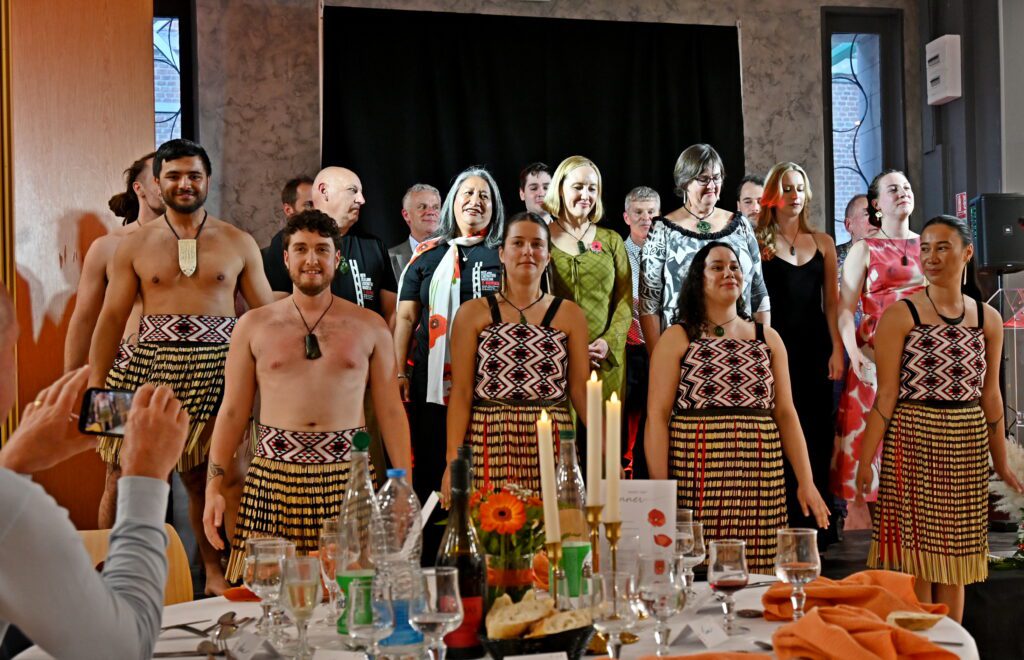
Paul and Lisa (second row, second and third from the left) at the Anzac Dinner.
“Past grandad we’ve got no further family history so literally, we got back on Sunday and on Monday I sent all the information I have to an ancestry website in the UK to find out more about our family. We want to go back as far as we can.”