
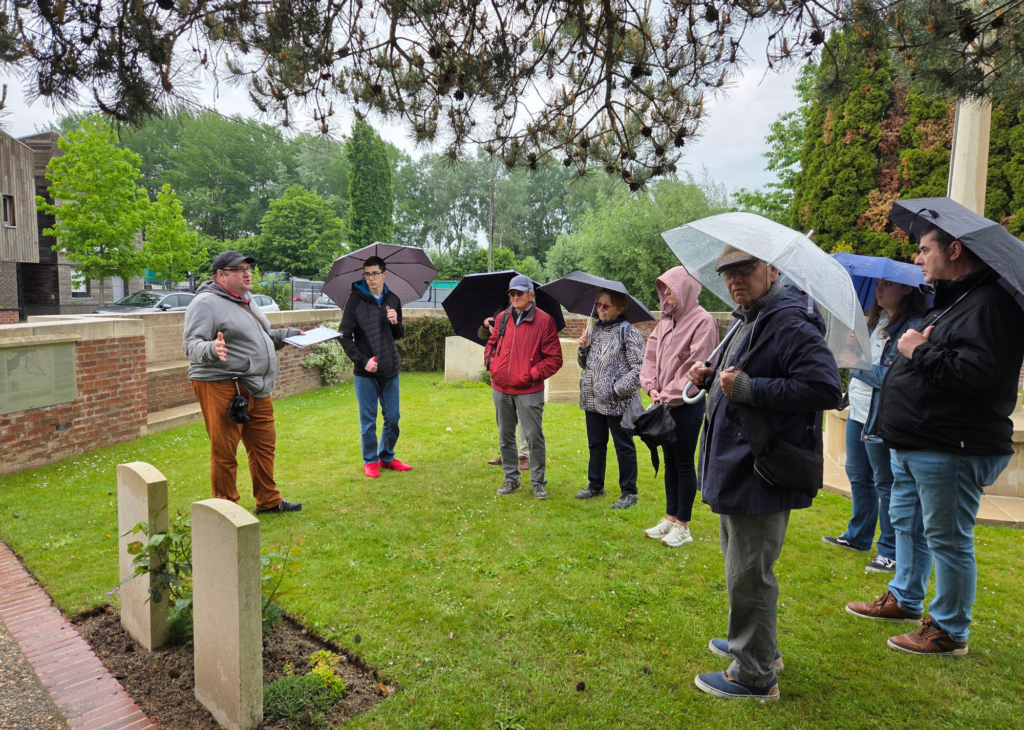
For the first time, the New Zealand Liberation Museum – Te Arawhata took part in the Printemps des Cimetières event, in collaboration with the Le Quesnoy Historical Society.
The first activity of the weekend was a guided tour of the cemetery, jointly led by Lindsay, the Museum Learning and Engagement Manager, and Grégory Chermeux, President of the Historical Society and Deputy for Heritage for the town of Le Quesnoy.
Lindsay presented the New Zealand section of the Commonwealth cemetery extension, where fifty New Zealand soldiers lie, having fallen during the liberation of Le Quesnoy.
This provided an opportunity to explain to visitors how Commonwealth cemeteries are organised, highlighting their maintenance, functioning, and architecture, which differ significantly from French military cemeteries.
Grégory then continued the visit by highlighting the diversity of nationalities represented in the Commonwealth cemetery, including Chinese, British, Russian soldiers, and even one German soldier.
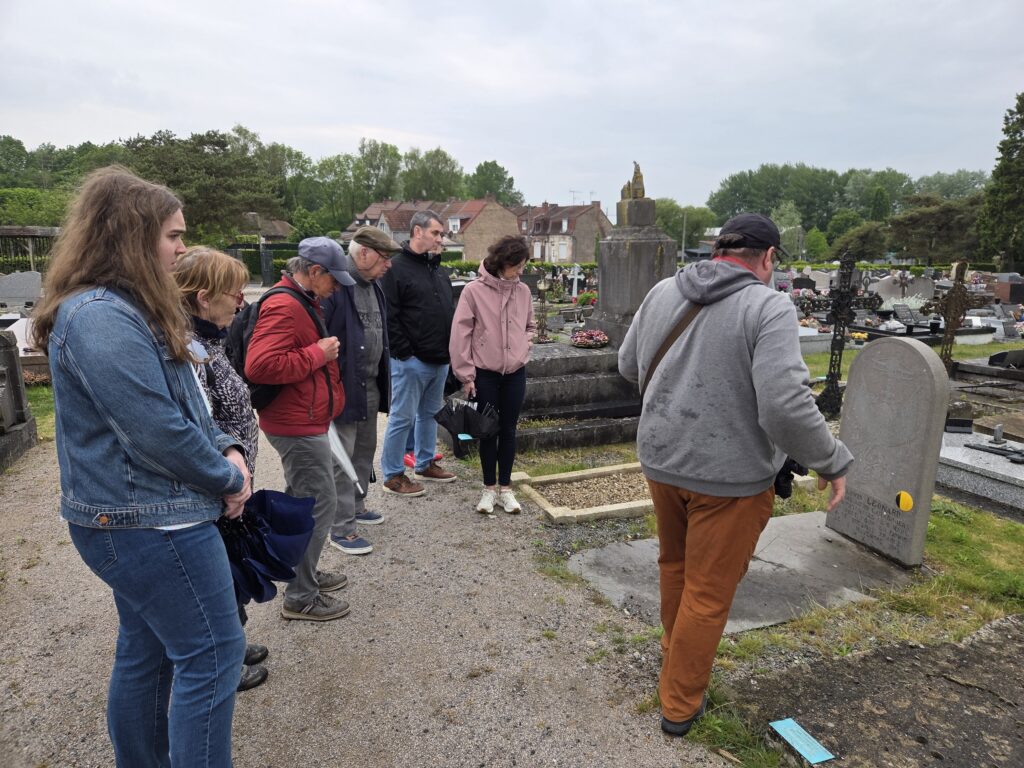
The tour then moved on to the communal cemetery, where visitors were shown, among others, the grave of a Belgian airman who crashed near Pont-à-Pierre, as well as that of a forced labourer from Saint-Quentin who died in Le Quesnoy.
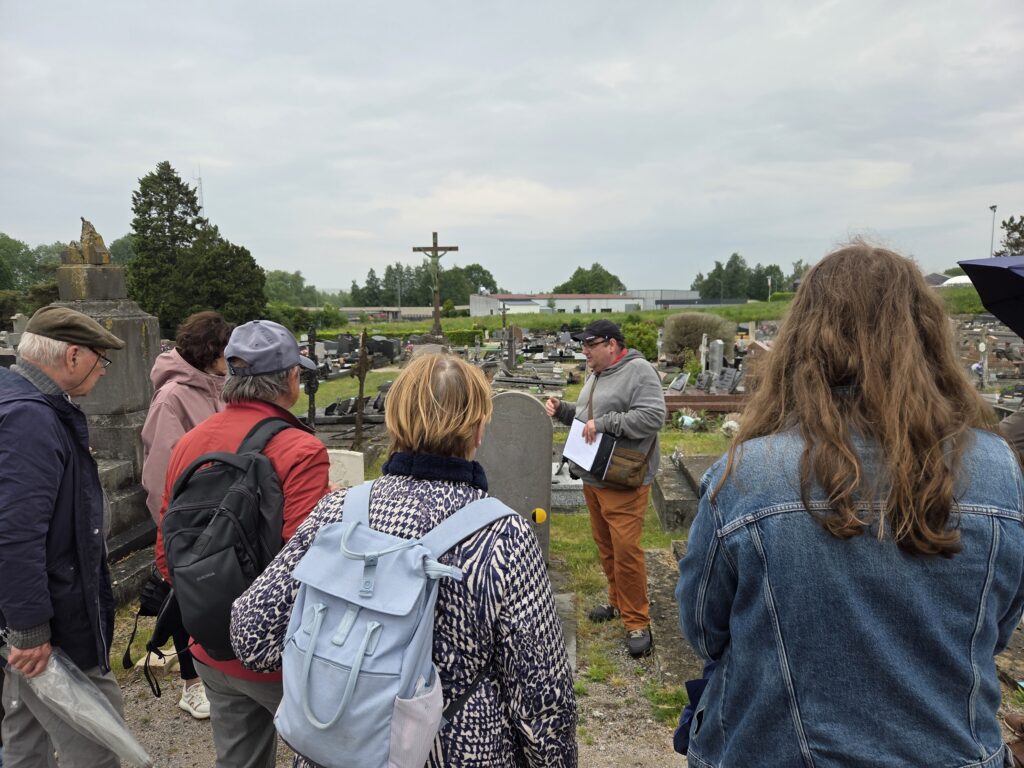
The preparation of the visit also revealed an interesting discovery: several British soldiers whose graves would typically be located in the Commonwealth extension are instead buried in the communal cemetery among the local inhabitants of Le Quesnoy. This opens new research perspectives, which we hope to explore further with historians from the Commonwealth War Graves Commission (CWGC).
The second activity of the weekend was our regular ramparts tour, offered in French, with a particular focus on the New Zealand Memorial, which is also part of the town’s funerary heritage and managed by the CWGC. This visit allowed participants to discover or rediscover the ramparts, gain a deeper understanding of the liberation of Le Quesnoy, and pay tribute to the soldiers commemorated at the memorial.
This edition of the Printemps des Cimetières was a great success, despite rainy weather that did not deter visitors. Building on this experience, the museum is considering offering cemetery visits again in the future for interested groups.