
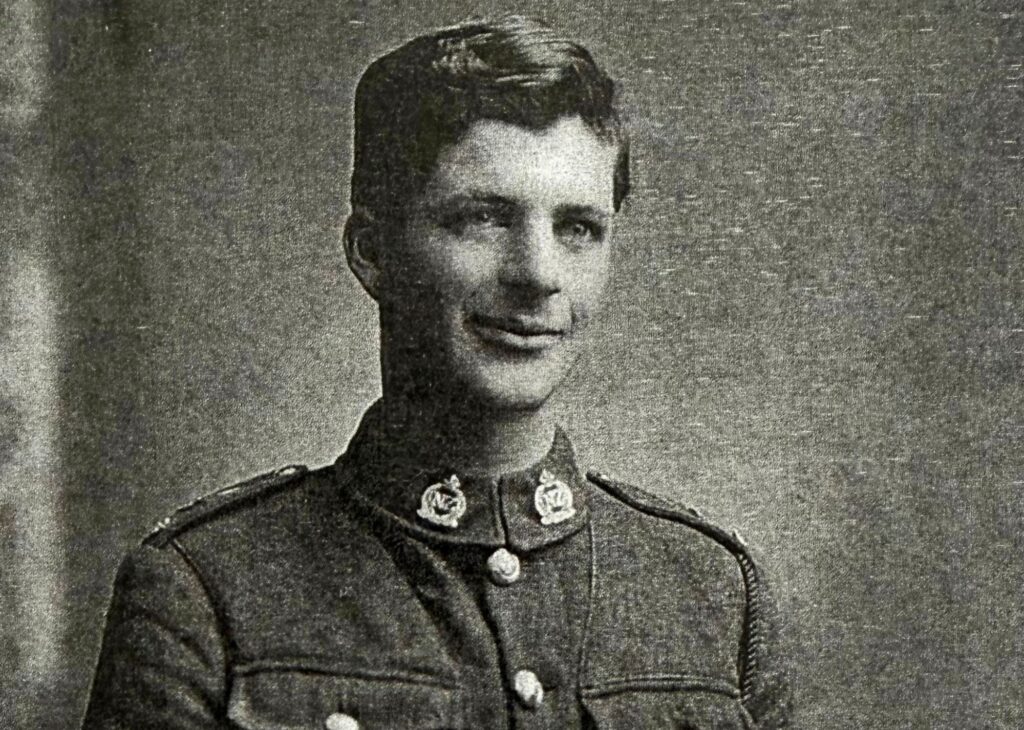
“How I am alive to write this today I don’t know,” wrote Captain James Nimmo from France on November 7, 1918.
Captain, named after his sailboat-captain father rather than it being a military rank, was a prolific letter writer during his World War One service.
In this letter, following the liberation of Le Quesnoy by Kiwi troops on November 4, he is describing a life-threatening dash through the streets of the town to rescue a wounded Kiwi soldier.
“We found out one of our boys was down the street wounded. A civie took the lead, and we started off getting a pancake each on the way. Had just got a mouthful when the old boy opened out from 50 yards down the street.
“The civie got one through the hand. One of my mates got one through the leg and one in the arm. There was no shelter and there was nothing for us to do but run for it. Could see bullets hitting the cobbles in front of us … but neither of us got hit.”
“They got both their wounded mates out later on that day though,” says Gordon Nimmo, Captain’s nephew and son of Allan, Captain’s younger brother.
Memories of Uncle Captain
Now 90-years-old, one of Gordon’s earliest memories is the delicious, sweet tea his grandfather, William, used to give him after coming home from work at the Nimmo family coal mine in Ngapara, North Otago.
This was the late 1930s, early 40s and both Captain and Allan worked in the mine too.
“Grandad carried his tea in an old golden syrup tin. It would sit down in the mine all day, so it was stone cold. Sometimes there was none left. He’d drunk it all. But when there was, we’d get whatever was left. We would sit there in the long grass and guzzle this bloody beautiful tea.” he smiles.
Gordon, who lives in Auckland, remembers his uncle Captain was tall, “a pretty serious sort of a guy”, and very family orientated.
“You never really knew whether you were on side with him or not, but that was probably because we were little monkeys. He had a busy life too. He was looking after sheep and cattle, milking cows and working in the mine all at the same time.”
From a mining family
Captain and Allan’s grandfather James Nimmo arrived in New Zealand with his wife Marion and family in 1877. They settled in Ngapara, 28km inland from Oamaru, and as a certified mine manager James started prospecting and opened the family mine in July 1878.
For almost all of the 93 years the Ngapara mine was open, it was run by a member of the Nimmo family.
Because of ill health, and after 10 years managing the mine, James handed the reins to his son George. When George died in 1897, youngest son William (Captain and Allan’s father) ran the mine until 1939; Allan had a short stint through to 1941; and Captain took over until it closed in 1971.
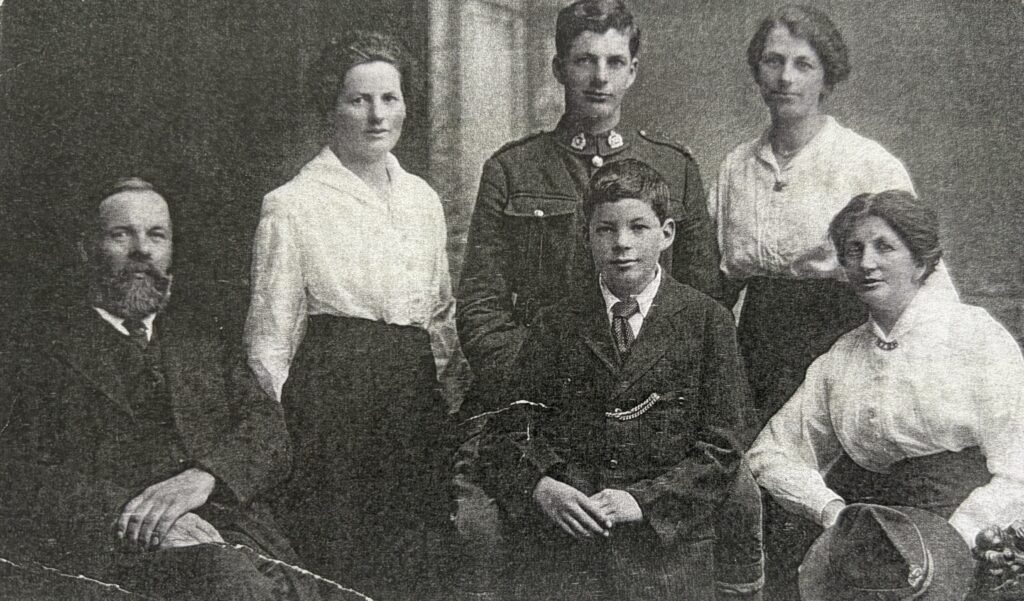
Captain, the third of William and his wife Nellie’s four children, was born on September 22, 1897.
When World War One broke out in 1914, he was working in the local store.
But to “toughen” himself up for war, he started working in the mine alongside his father.
Captain’s life during war time
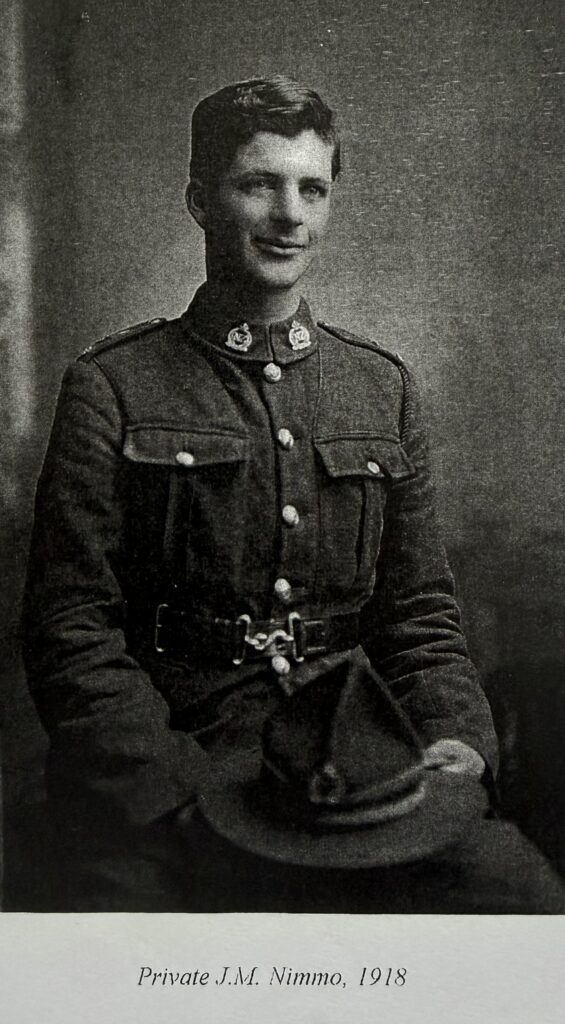
Enlisting soon after his 20th birthday in 1917, he dropped his first name and went by James or Jim so Captain would not be confused for an army rank. Entering the war relatively late, he joined the 3rd Battalion, 3rd New Zealand Rifle Brigade on September 27, 1918.
Despite only a short time in the field, Captain took part in Allied attacks during the Hundred Days Offensive, the liberation of Le Quesnoy, and following the Armistice on November 11, was involved in the occupation of Cologne.
His war time letters were lively, honest and insightful, moving from reassuring his family “everything is Jake” to despair about the futility of war.
“War is Hell!! If I should be unlucky enough to go out, I would so gladly if I thought I had helped to finish wars forever. If people could possibly realise what a terrible thing it is there would be no peace talk until there was no hope of another scrap like this occurring again.”
In his letter about Le Quesnoy, he writes affectionately of the locals’ delight at being liberated.
“We got into the town and were simply overwhelmed by Civies. Laughing, crying, and just about mad with joy. It was ten minutes before we could get away.”
He signs the letter off in a typically upbeat way, but there is a sense he’s missing home.
“By the way, I couldn’t get any Xmas cards. Had no money the day they were procurable. However, my wishes are just as strong on the scraps of paper I sent. Well, I must close now hoping to see you before many months. I Remain, Jim.”
Captain is portrayed in touching detail by his eldest daughter Marian Young in a Preface to a collection of his letters compiled by the family.
“We knew him as a man of great integrity, hardworking, rather scrupulously honest and upright, with a strong sense of honour and justice,” she writes.
“The young man who emerges from these [letters] is more light-hearted with a greater sense of humour than we might have expected.”
Continuing his service at home
After the war Captain returned to Ngapara, married local primary school teacher Elsie Scoon, and the couple had five children. Sadly, William, one of their twin boys, died when he was just 10 days old.
The Nimmo family was very close. In Ngapara, the family had three houses close together for grandparents William and Helen, Captain and Elsie, and Gordon’s parents Allan and Mary.
However, in 1941, having passed all his mining exams, Allan applied for a Mine Managers job at Coalgate, west of Christchurch, and moved there with his family. Yet the Nimmo families still remained close with multiple visits every year.
Allan was especially community minded, says Gordon, reeling off an impressive list of his father’s achievements and initiatives, from establishing a horticultural society and introducing school forestry fundraisers, to starting the local St John ambulance service and volunteer fire brigade.
“The Volunteer Fire Brigade is still going. Allan was ahead of his time, and not just as a community man. He was an innovator. He started a harvest festival with the aim of collecting surplus produce and donating to charities,” says Gordon.
“I remember him as a man who worked hard, looked after his family, helped build his local community and didn’t waste time talking about what needed to be done – he just did it.”
Gordon says his grandfather, father, and Captain all believed families and neighbours had a responsibility to look after one another.
“It was almost like a hereditary thing,” says Gordon. “That’s what Dad and old Captain were all about.”
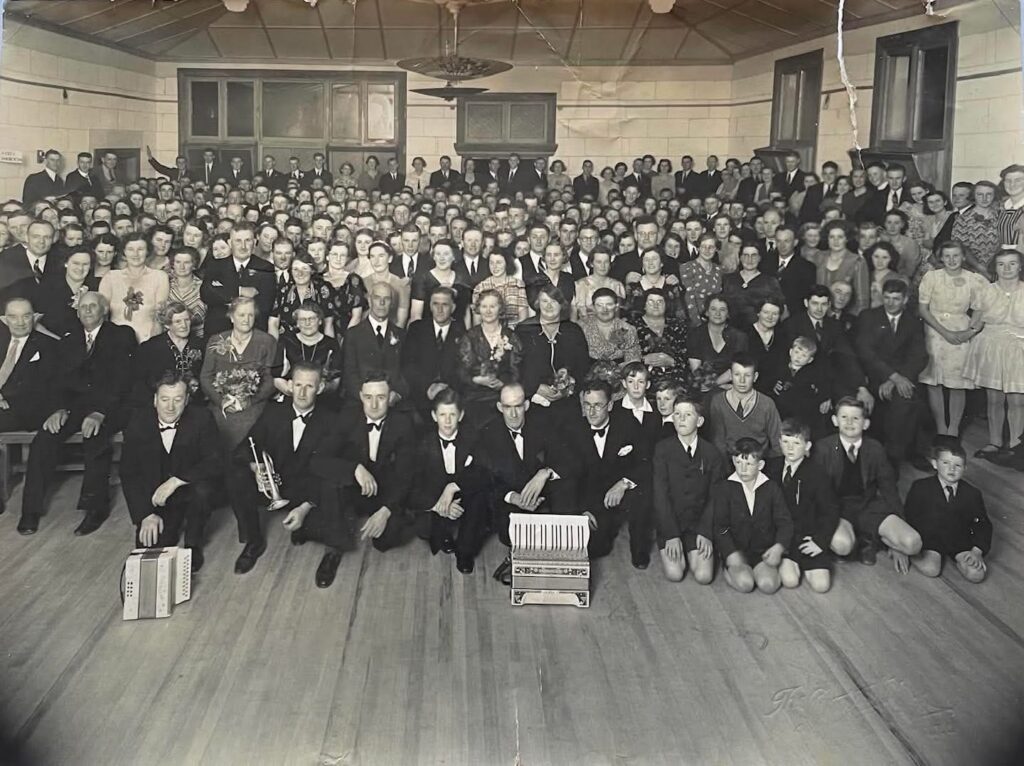
Ngapara was central to Captain’s life where he was Chairman of the School Committee and the Cemetery Trust. He and Elsie also jointly drew up plans for the Ngapara Hall to save the community from paying an architect.
Marian writes that Captain, who died on August 5, 1979, at the age of 82, was talented, generous, and curious. “In spite of living in one small country township for most of his life, Captain was not narrow in his outlook and remained keenly interested in world events, politics, and sport.”