
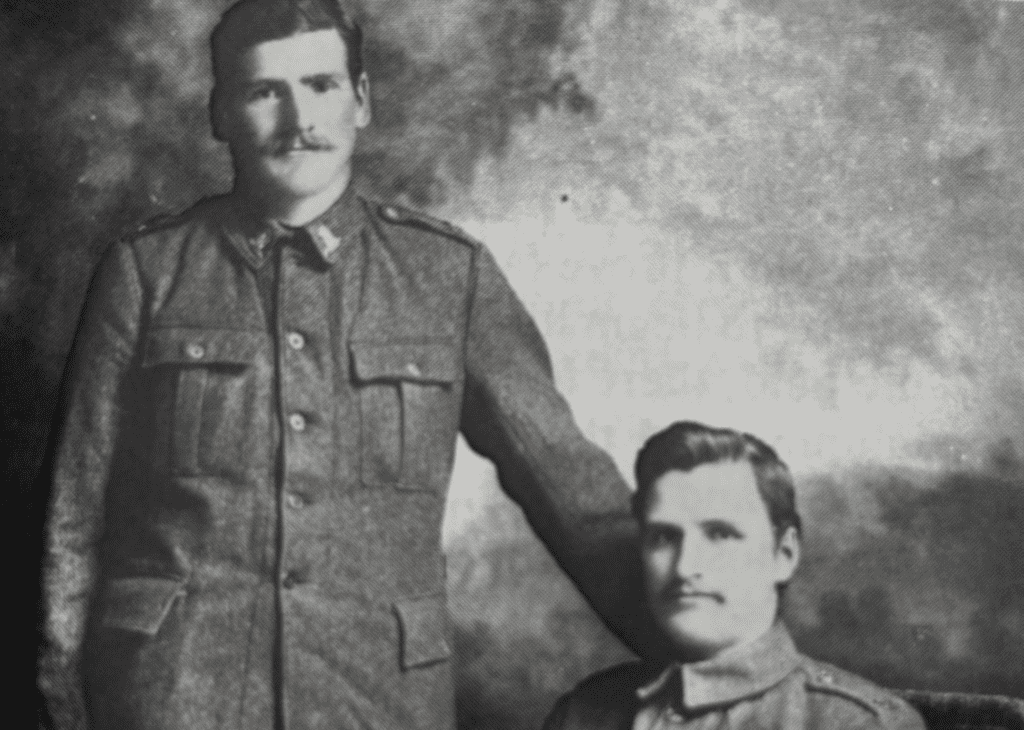
After four decades safeguarding his great uncle’s World War One service medals, Jeff Riddle decided it was time to finally visit his grave in the small French town of Le Quesnoy.
In September 2025, Jeff, along with his sisters Lindsay and Shirley, and his wife Margaret, arrived in the UK. In Jeff’s luggage were the precious war medals of his great-uncle Ewing Stevens Riddle, who was killed during the liberation of Le Quesnoy on 4 November 1918. The plan was to meet Lindsay’s son, Michael, in London and travel to Ewing’s grave in France, where Jeff would pass the medals on to his nephew.
During their trip, they would visit the New Zealand Liberation Museum – Te Arawhata in Le Quesnoy to learn more about Ewing and his brothers’ wartime experiences.
Te Arawhata tells the story of the liberation of Le Quesnoy by Kiwi soldiers during World War One. While no civilian lives were lost, Ewing was one of the many New Zealand soldiers who died liberating the town. The liberation created a special bond between Le Quesnoy and New Zealand that endures to this day, almost 110 years on.
Sadly, Ewing’s family never made it to his grave. Within days of arriving, all four fell gravely ill with Influenza A and pneumonia. Lindsay spent seven days in hospital, Jeff spent five and Margaret spent 45 days in an English hospital before being flown home to spend another 26 days in hospital. Sadly, she never recovered and died on Waitangi Day this year.
After 40 years of responsibility, the handover of medals finally happened – just not the way anyone had imagined.
“I didn’t even get to see Michael,” reflects Jeff. “Lindsay did manage to deliver Ewing’s medals to him, so he has taken over that responsibility, but we would have loved to do the handover in Le Quesnoy to honour Ewing and our other three great uncles who also fought in World War One.”
The weight of responsibility
When Jeff inherited the medals from an aunt decades ago, he knew almost nothing about Ewing, but the heirlooms sparked a quest to uncover his great uncle’s story.
“They were passed down to us because our father was named after Ewing Stevens Riddle and he was born six weeks after Ewing’s death, but there are thousands of relatives now who could claim a right to these medals; I sort of felt responsible for them.”
For decades, the medals sat on a shelf. Though they “made their way to Anzac Day commemorations several times over the years with various relatives”, Jeff couldn’t shake the feeling that he needed to do more.
“Somehow these medals have given me a huge sense of responsibility towards the memory of my great fallen uncle and his brother, who is also resting on the Somme,” he said.
Jeff also had his grandfather Jim Thomson’s medals from Gallipoli and his father Ewing’s medals from North Africa and Italy.
“I wanted to take Michael to Le Quesnoy and march around with him to instil a bit of history into him, so that he knows he’s taken on the mantle of the next 40 years’ of responsibility. We might all pop off one day soon, and you’ve got to do those sorts of things.”
The legacy of a family name
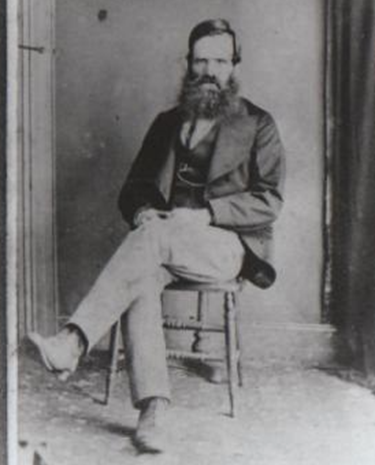
To understand how Ewing’s medals ended up with Jeff requires going back to 1866, when his great-grandfather, Walter Riddle, emigrated from Scotland to New Zealand with his first wife, Janet Crighton and their four children.
Walter and Janet had four more children before Janet died in 1875. Walter later married Marion Campbell Stevens, and together they had 12 more children, including Jeff’s grandfather Colin.
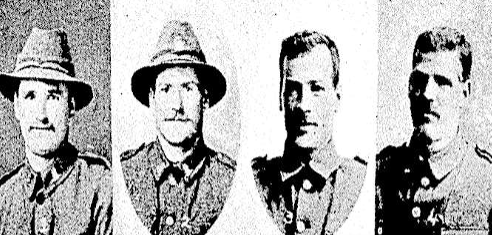
By 1914, Marion was living in the King Country, grieving the recent death of her husband. Over the ensuing years, four of her sons – John, Hormah, Alec and Ewing – enlisted and shipped off to fight in World War One. Only two would return.
Four brothers go to war
John Riddle
When John enlisted, he was a 29-year-old farmer in Kaeaea, a tiny remote settlement in the King Country. Following basic training, he embarked from Wellington for Suez on 9 October 1915, serving in the 16th Company, 1st Battalion of the Auckland Infantry Regiment. He fought in Egypt and Western Europe through 1916.
On 30 September 1916, John went missing on the Somme. His body was never found. He was classified as “missing, believed to be killed in action in the field in France”. He was posthumously awarded the British War Medal and Victory Medal.
Hormah Riddle
Aged 23, Hormah enlisted with his older brother John, and they embarked for Suez together. However, their paths diverged as Hormah’s three years and nine months of military service took him through multiple theatres and injuries. The catalogue of Hormah’s illnesses and injuries includes gastritis (January 1916), dysentery requiring 10 days in a field ambulance (September 1916), reported missing in action (7 June 1917) before being found and hospitalised after a gas attack, then shot in the right thigh at Rouen (September 1918).
After being deemed unfit for service for at least 12 months, he was shipped back to New Zealand in March 1919. He was awarded the 1914-1915 Star, British War Medal and Victory Medal.
Alec Riddle
A farmer at Arapae near Te Kuiti, Alec spent his days with his wife Alice and two young children before enlisting in July 1916, aged 29. He embarked for Devonport in England and joined the 1st Battalion, Wellington Regiment.
Alec served at Rouen from early March 1917, spending two months as a guard at the II Anzac Detention Camp. In January 1918, he suffered a muscle strain in his back that plagued him for more than six months. By June, he was evacuated to England with paraplegia. By September, he was deemed unfit to serve and sent home on 21 January 1919, awarded the British War Medal and Victory Medal.
The liberation of Le Quesnoy
Ewing Riddle
Ewing enlisted alongside Alec in July 1916, aged just 21. Like his brother, he’d been farming at Arapae near Te Kuiti. On 15 November 1916 – a month after his older brother John was killed on the Somme – Ewing embarked with the NZ Rifle Brigade.
Alec and Ewing marched to the Etaples camp together on 3 March 1917, joining the Wellington Battalion. While Alec went straight to the field, Ewing was hospitalised with gastritis. He returned to England before rejoining his battalion on 9 July in France
Ewing remained in France through the final months of the war.
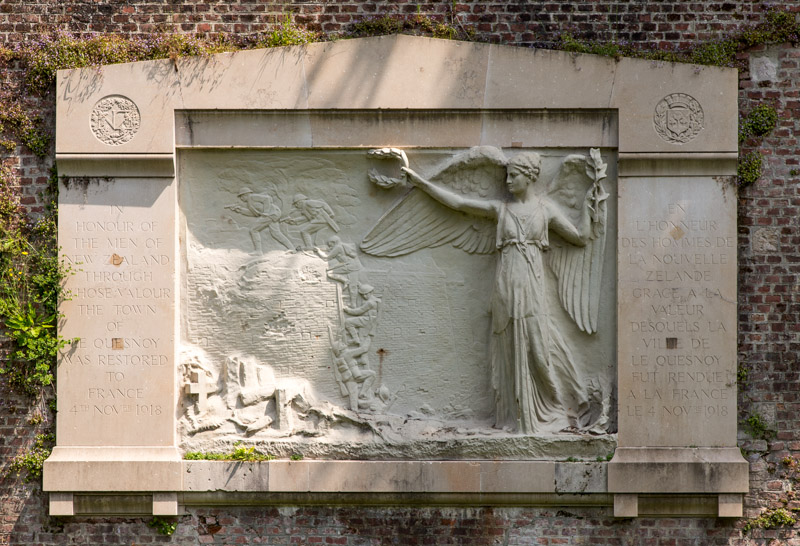
On 4 November 1918 – just one week before the Armistice – Ewing helped liberate Le Quesnoy and was killed in action. In Christopher Puglsey’s book Le Quesnoy, New Zealand’s Last Battle 1918, Anglican padre Clive Mortimer-Jones described Ewing’s last dash.
“We had just crossed a sunken road when [the enemy] landed a shell on a spot about 30 yards in front of us. Thinking to get past, we went for our lives; but another shell came, exactly over the market when the previous one landed and where we apparently had just reached. It killed Ewing Riddle of the team, from Te Kuiti (a fine man and a great pal)”.
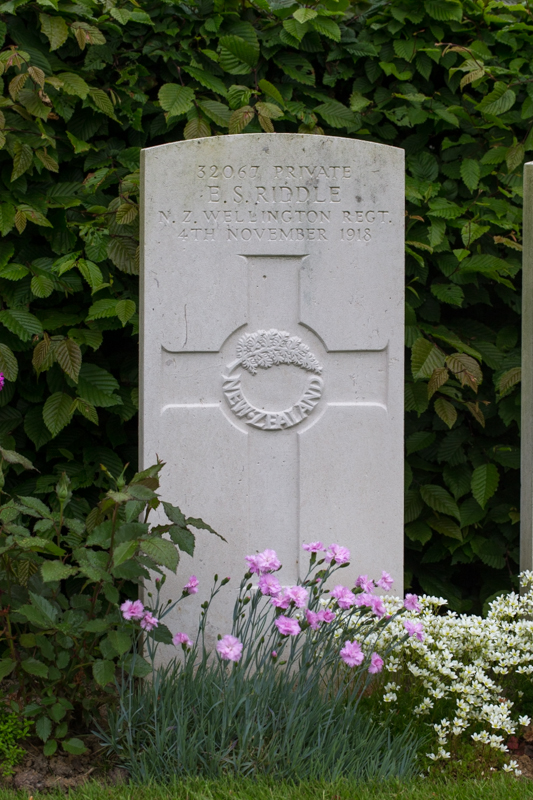
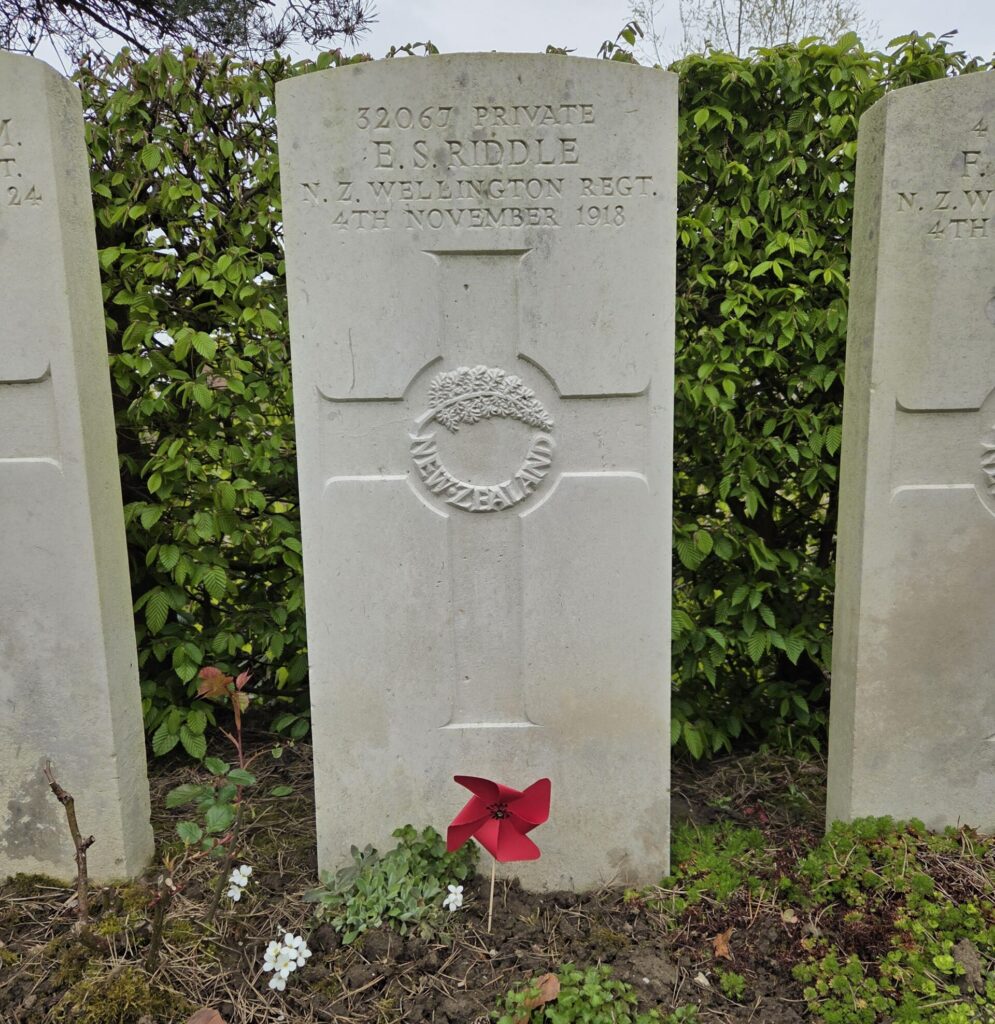
Ewing was buried at the Le Quesnoy Communal Cemetery Extension and posthumously awarded the British War Medal and Victory Medal. These were the medals that would eventually make their way to Jeff, whose father was also named Ewing.
The unfinished pilgrimage
Decades later, the war medals piqued Jeff’s interest in learning more about Ewing and his brothers. This was the impetus for planning a trip to visit Le Quesnoy and Te Arawhata.
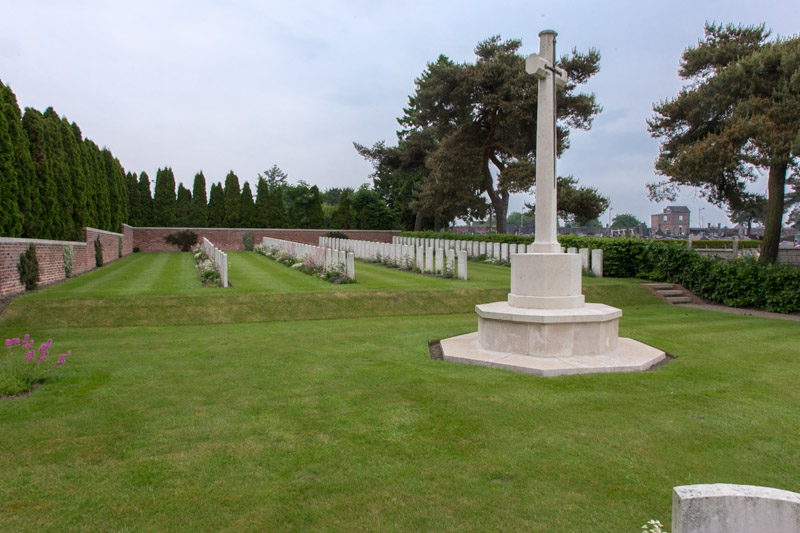
“We never got to stand at Ewing’s grave together, never got to pass those medals to Michael in the place where his great-great uncle fell,” Jeff reflects. “But the medals are with him now, and that’s what matters. The responsibility has been passed on. Ewing’s sacrifice, and the sacrifices of all four brothers, will be remembered. And one day, I still hope to make that pilgrimage to Le Quesnoy – to finally honour Ewing properly.”